Nursing home wildfire smoke safety: a 2026 family guide
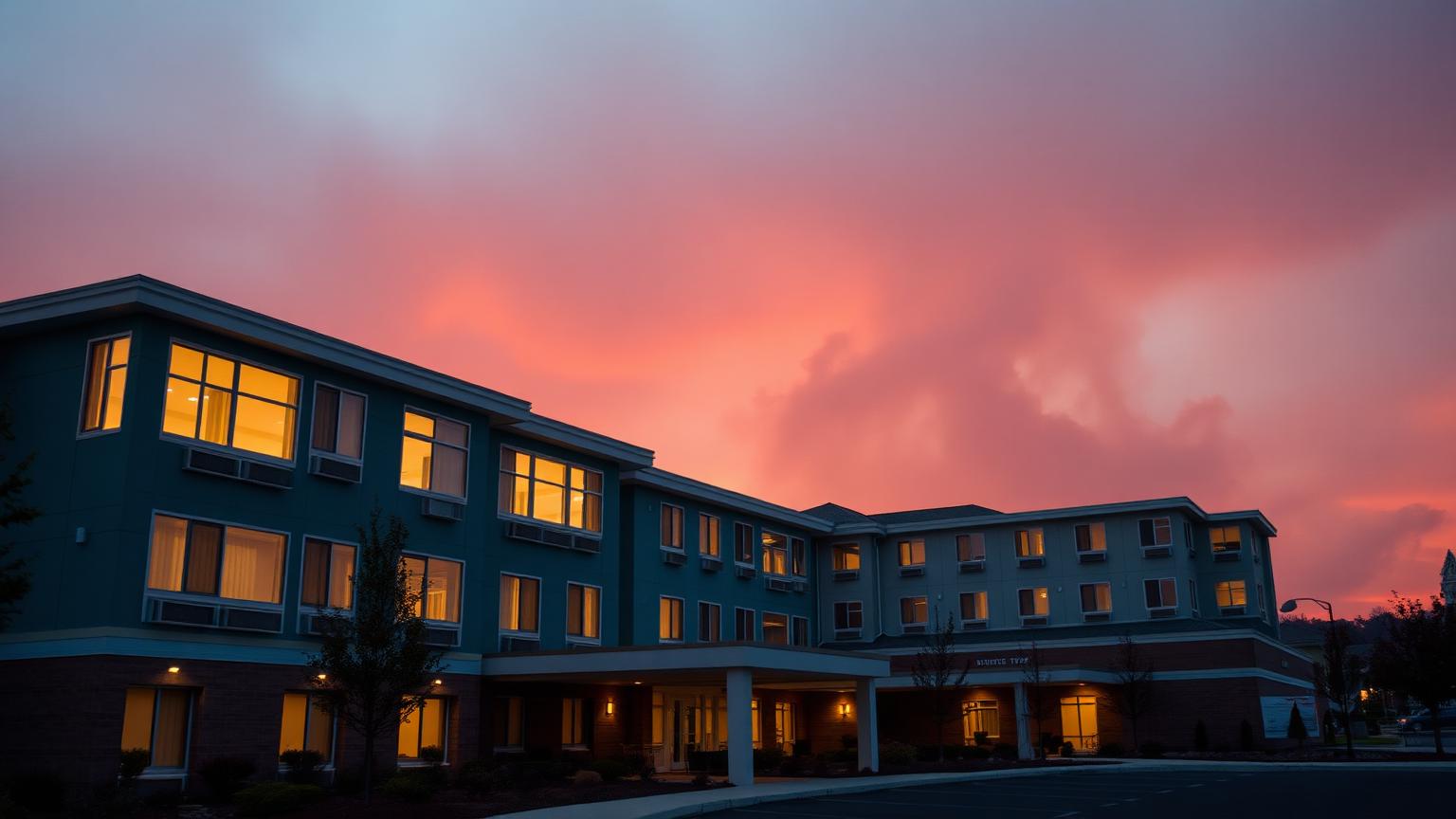
By the first week of July 2026, satellite imagery from NOAA already showed smoke plumes from fires in Oregon, Idaho and northern California pushing east across the Rockies and into the upper Midwest. A nursing home does not need to be inside a fire perimeter to be affected. Fine particulate matter, the pollutant that makes wildfire smoke dangerous, travels for days and settles into buildings whose HVAC systems were designed for pollen and cooking odors, not for a week of hazardous outdoor air. Residents in long-term care are among the most exposed groups in the country: older lungs, common heart failure and COPD diagnoses, limited ability to relocate, and a building that opens its doors dozens of times a day for staff, visitors and deliveries. This guide covers what wildfire smoke actually does to a frail resident, what a well-run home should already have in place for summer 2026, and the five questions to ask the administrator before smoke season peaks in August.
Why wildfire smoke is a nursing home problem, not a fire zone problem
The dangerous ingredient in wildfire smoke is fine particulate matter, PM2.5, particles so small that hundreds fit across a single human hair. They bypass the nose and upper airway, reach the alveoli, and cross into the bloodstream. For a 40 year old office worker, a bad smoke day means a headache and a scratchy throat. For an 84 year old resident with heart failure and mild COPD, the same PM2.5 concentration measurably raises the risk of an emergency department visit inside 24 to 48 hours. Research summarized by the US Environmental Protection Agency links wildfire smoke exposure to increased hospitalizations for heart attacks, strokes, asthma exacerbations and COPD flares, and observational data from the 2020 and 2023 wildfire seasons shows the effect is sharpest in adults over 65. Distance from the fire is a poor proxy for risk. A resident in Minneapolis breathing air rated Very Unhealthy on the AQI is at higher acute risk than a resident in a coastal California town whose local AQI happens to be Moderate that day. The building's response, not its zip code, is what matters.
What the 2026 smoke season already looks like
The National Interagency Fire Center reported an above-average start to the 2026 season across the Pacific Northwest, with the first Red Flag Warnings issued in mid-June and the first multi-state smoke transport event tracked by NOAA in the final week of June. Climate research published through NOAA's National Centers for Environmental Information shows the annual acreage burned in the western United States has roughly tripled since the 1980s, and the smoke that used to affect a handful of western counties now regularly reaches Chicago, Atlanta and the eastern seaboard. For nursing homes, the practical change is that smoke is no longer a regional issue with a two week window. It is a national issue with a four month window, running from June through late September in most years and stretching into October in dry years. The buildings that treat it as a once-a-decade emergency are the buildings that will be caught unprepared, and the families that treat AirNow as a summer routine will be the ones who catch a problem early.
What federal rules already require
The CMS emergency preparedness guidance requires every Medicare and Medicaid certified nursing home to maintain an all-hazards emergency plan, conduct annual training and testing, and coordinate with state and local emergency authorities. Wildfire smoke is not always named in the plan by default, but it falls squarely inside the all-hazards standard, and state inspectors in California, Oregon, Washington, Colorado, Arizona and New Mexico now routinely ask facilities to document their smoke response procedures during survey. In practice, a compliant plan for a 2026 smoke event covers four things: an air quality monitoring routine tied to a specific AQI trigger, an HVAC procedure that closes or re-filters outdoor air intakes at that trigger, a shelter-in-place protocol that limits door openings and outdoor activities, and a communication plan that tells families the same information at the same time. Deficiencies in this area show up on the CMS 2567 inspection report and are visible to families through Medicare.gov Care Compare, which is the first place any family should look before a tour.
What a well-prepared building actually does
The clearest sign of a competent smoke response is a MERV-13 or higher filter on the central HVAC system and a portable HEPA air cleaner in every resident room, sized for the room's square footage. The EPA's wildfires and indoor air quality guidance sets out the sizing rule: a purifier's clean air delivery rate for smoke should be at least two thirds of the room's floor area in square feet. On top of that hardware, a good building has a written trigger table. Below AQI 100, normal operations. At AQI 101 to 150, outdoor activities cancelled, MERV-13 filters checked, portable HEPAs turned on in common areas. At AQI 151 to 200, outdoor air dampers closed, entry doors reduced to a single monitored entrance, residents with respiratory conditions checked twice per shift. Above AQI 200, shelter-in-place mode, family visits inside only, N95 respirators offered to staff working near entry points, and pulse oximetry added to daily vital sign rounds for residents with COPD, heart failure or an active dementia diagnosis. The exact thresholds vary, but the presence of a written table and a named staff member who checks AirNow every two hours are the two features that separate a prepared building from one that will improvise its way through August.

The residents most at risk
Every resident is affected by smoke, but the acute risk concentrates in four groups. Residents with COPD or asthma decompensate first, because the underlying disease already narrows the airway and inflammation from PM2.5 tips them into an exacerbation. Residents with heart failure or coronary disease are next, because PM2.5 triggers the systemic inflammation and vascular changes that push a fragile heart into decompensation, and the CDC's MMWR reports on wildfire smoke and cardiovascular events consistently show a spike in cardiac ED visits during regional smoke events. Residents with dementia are third, because they cannot self-report the early symptoms of breathlessness, they may pull off an oxygen cannula or refuse to stay indoors, and their behavioral symptoms often worsen during any environmental stressor. Residents recovering from a recent stroke or a post-operative stay are fourth. Any care plan review during smoke season should ask, for each of these four groups, what the individual response looks like: an escalated inhaler regimen, a temporary oxygen order, a pulse oximeter at the bedside, or a documented one-to-one supervision plan during the smoke event. The same discipline that our 12 red flags of a nursing home tour guide applies to routine care applies here, the building's process is only as good as the plan for the specific resident sitting in front of you.
What families should check themselves
Families do not need to become air quality specialists to protect a parent in a nursing home. Three habits cover most of the ground. First, bookmark AirNow and check the AQI for the facility's zip code the same way you check the weather, at least once in the morning and once in the evening from June through September. AirNow is a joint EPA and multi-agency service, it is free, it accepts a zip code, and the colored AQI scale is the same one every nursing home in the country uses. Second, when the AQI passes 150 at the facility, call the nurses' station and ask three questions: has the outdoor air intake been closed, is the portable HEPA in the room turned on, and has your parent's oxygen saturation been checked in the last four hours. Ask calmly and take a note of the answers with the time. Third, on any smoke day, ask visiting relatives to check in before they arrive and to wear a well-fitted N95 through the door. Family members are the most common vector of dust, smoke and pathogens into any resident's room, and the same discipline that got families through winter respiratory virus season carries directly into summer smoke season. Our summer heat safety checklist covers the parallel routine for heat, and the two routines share the same daily rhythm.
The five questions to ask before smoke season peaks
By early July the calendar still gives a family a few weeks before the historical peak of the western smoke season in August and early September. Use the window. Ask the administrator, in writing if possible, for five specific answers. One: what AQI level triggers the facility's shelter-in-place protocol, and where is the trigger documented. Two: how many portable HEPA air cleaners are on site right now, and which resident rooms do not currently have one. Three: what is the current MERV rating on the central HVAC filter, when was it last changed, and what is the schedule during smoke events. Four: how many fit-tested N95 respirators are stocked, and which staff roles are trained to wear one. Five: how does the facility communicate with families during a smoke event, by phone tree, text alert, portal message, or a posted sign at the entrance. A good building answers all five in a single conversation. A building that cannot answer any of the five is a building whose process does not yet exist, and that is a legitimate reason to raise a concern with the long-term care ombudsman before smoke arrives, not after. The same admissions discipline we describe in our how to choose a home guide applies to smoke preparedness, ask the questions when the building is not under pressure and the answers are more honest.
When smoke and heat arrive at the same time
The hardest days of the 2026 season will be the days when a heat dome and a smoke plume overlap, which is the pattern the West saw repeatedly in 2021, 2023 and 2024. The two hazards force opposite responses. Heat pushes a building to open windows and increase ventilation. Smoke pushes it to close everything and recirculate filtered air. A well-run facility resolves the tension by relying on mechanical cooling with a sealed envelope, a MERV-13 filter, portable HEPAs in resident rooms, and, if the building has one, a clean-air room where residents with the most vulnerable respiratory or cardiac conditions can spend the worst hours of the day. If the building's answer to a combined heat-and-smoke day is to open the windows, that is not a plan, that is a gap. Ask the administrator directly what happens when the outdoor AQI is above 200 and the outdoor temperature is above 95 degrees, and listen for a specific answer that names the room, the equipment and the resident triage. The ready.gov wildfire preparedness page and our own summer heat safety guide both cover the individual hazards. The combined-hazard day is where good buildings prove themselves, and where under-resourced buildings run out of options first.
Frequently asked questions
Authoritative sources
Figures, rules and claims in this post are drawn from these official and independent sources.
- Particulate Matter (PM) Basics
US Environmental Protection Agency
- Wildfire Smoke and Your Patients' Health
US Environmental Protection Agency
- Wildfire Smoke Guide: Indoor Air Cleaners and Filters
US Environmental Protection Agency
- AirNow real-time air quality index
US EPA and partner agencies
- Quality, Safety and Oversight Group: Emergency Preparedness
Centers for Medicare and Medicaid Services
- Medicare.gov Care Compare
Centers for Medicare and Medicaid Services
- Wildfires preparedness
Ready.gov, US Department of Homeland Security
- National Centers for Environmental Information
NOAA
Related guides on this site
More from the blog

About this post
Written and reviewed by the Nursing Home Match editorial team. We update posts as the underlying rules and data change. This post is general information, not personal medical, financial or legal advice, always confirm details on Medicare.gov Care Compare or My Aged Care before making decisions.