Nursing home summer heat safety: a 2026 family checklist
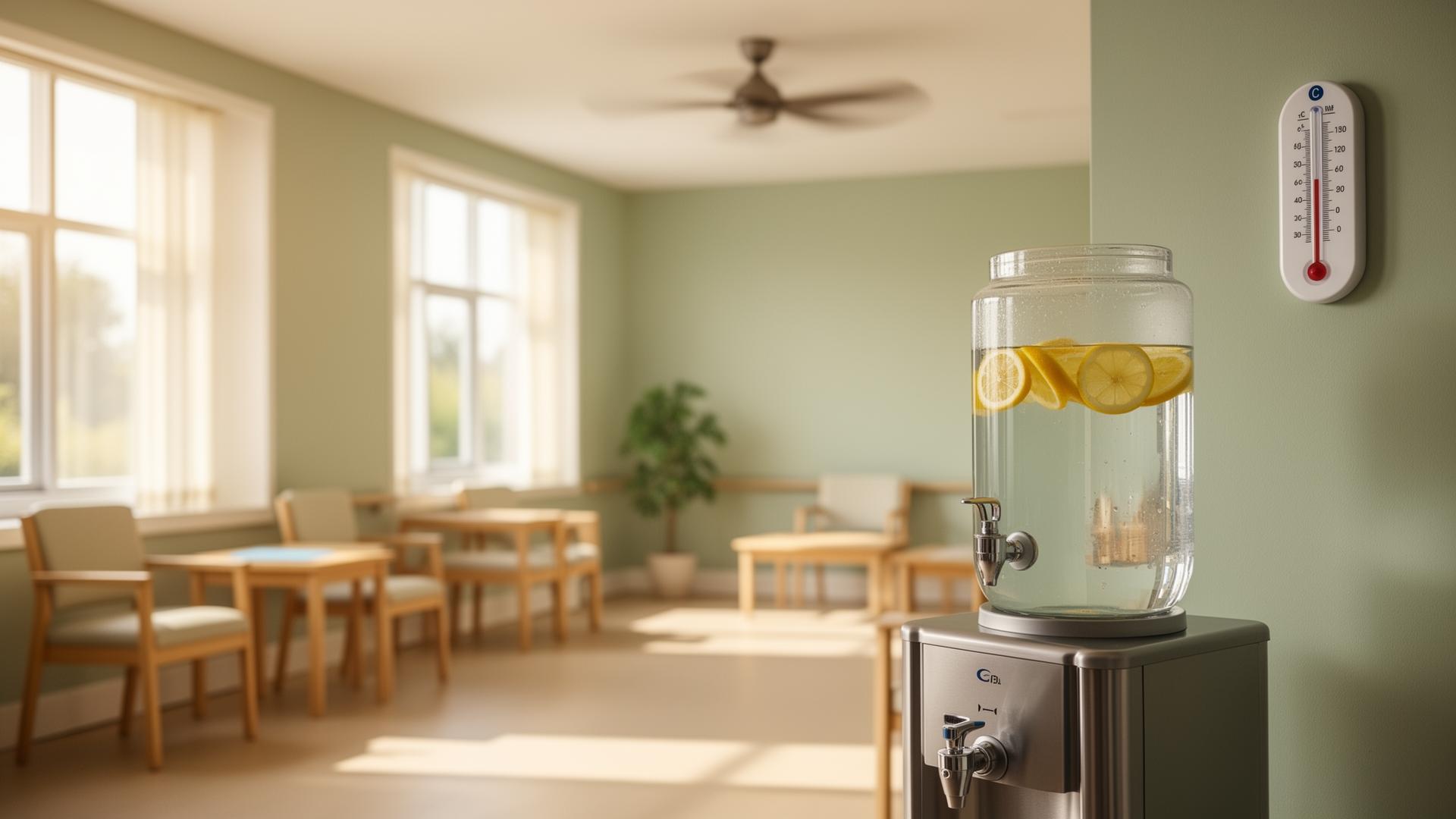
The first official heat dome of 2026 settled over the central US in the second week of June, and the National Weather Service has already issued excessive heat warnings for cities from Phoenix to St Louis. For families with a parent in a nursing home, this week is the one that matters. The CDC counts heat as the deadliest weather hazard for Americans over 65, and inside that age band, residents of long-term care facilities are the highest-risk group of all. They are older, frailer, more likely to be on medications that suppress thirst, and least able to walk to a cooler room without help. Most heat-related deaths in nursing homes are preventable, and the prevention work happens before the heat wave arrives. This guide explains the federal temperature rules a US nursing home must meet, the five things a family can check on a single visit this week, and the medications and warning signs that turn a hot afternoon into a medical emergency.
Why summer is the deadliest season in long-term care
Heat kills more Americans every year than hurricanes, tornadoes and floods combined, and roughly 80 percent of heat-related deaths are people over 65. Residents of nursing homes face the steepest risk because three things stack on top of each other. Their bodies regulate temperature less efficiently, their thirst signals are weaker, and their daily routines are set by staff rather than by how they feel. A 78-year-old in her own kitchen will get up and pour a glass of water when she feels warm. The same woman in a nursing home is waiting for the next hydration round. CMS Adverse Event reports from the 2023 and 2024 summers show clusters of resident deaths during multi-day heat events in Oregon, Texas and Florida, almost all in homes with documented air conditioning failures or with no central cooling at all. The 2026 outlook from the National Oceanic and Atmospheric Administration projects an above-average summer for most of the country, which means more multi-day events and more facility-level stress tests. The families who use the early weeks of June to ask questions are the ones whose parents get through August without an ambulance ride.
The federal temperature rules nursing homes must meet
Every Medicare- and Medicaid-certified nursing home in the US is bound by the federal Life Safety Code adopted by CMS. The relevant requirement is in 42 CFR 483.90(i)(6), which sets the indoor temperature range for resident areas at between 71 and 81 degrees Fahrenheit. Homes certified before 1990 have a narrower legacy carve-out, but every home built or substantially renovated since then is held to the full range. Enforcement is complaint-driven, which is the part most families miss. State survey agencies do not patrol facilities looking for hot rooms in July; they respond to a written complaint or to a death report. A family that takes a single reading on a portable thermometer and files it the same day with the state survey agency will usually trigger a follow-up survey within two to ten business days. CMS also publishes an Emergency Preparedness rule that requires every facility to maintain a written plan for heat events, including a defined cooling area, a power backup for HVAC equipment, and a staff training schedule. The plan is a public record; any family can ask to read it during a tour or a visit, and a home that cannot produce a current copy within an hour is already failing the rule.
How to inspect a home's heat plan before the next heat wave
The inspection is short and does not require any technical knowledge. Walk into the building between 2 pm and 5 pm, which is when indoor temperatures peak. Carry a small digital thermometer; the kind sold for terrariums or wine fridges reads accurately and costs under twenty dollars. Take three readings: at the nurses' station, in the resident's room with the door closed, and in the common area used for activities. Any reading above 81 degrees Fahrenheit is outside the federal range, and any reading above 84 is the threshold the CDC associates with measurable physiological stress in older adults. Look for three things while you walk. First, are the window blinds drawn on the sun-facing side of the building. Second, are portable fans positioned to move air across rooms, not blowing hot air around a single resident. Third, is the central air conditioning audibly running at the wall and floor vents in the corridors. If the answer to any of these is no, ask the charge nurse on duty when the HVAC system was last inspected and where the written heat plan is kept. A well-run home produces a binder. A home that cannot answer is a home to revisit on a different shift.
Hydration: the number families should actually ask about
Hydration is the single most reliable lever a nursing home has to reduce summer heat injury, and it is the area where staffing levels show up most directly. The American Geriatrics Society recommends a daily fluid intake of roughly 1.5 to 2 liters for ambulatory older adults, adjusted upward in hot weather. The number to ask about is the home's documented hydration rounds. A typical schedule is four to six rounds per day, with a small drink offered to every resident at each round, plus a refill of bedside water at every shift change. Ask the charge nurse three plain questions. How many hydration rounds do you run on a summer day. Who tracks whether a resident actually drank the offered water. What is the protocol if a resident refuses three rounds in a row. The third question is the one that separates good homes from poor ones, because residents with cognitive impairment will refuse water repeatedly without recognizing they are thirsty, and the protocol has to escalate to a nurse practitioner, not stop at the aide who poured the cup. The Centers for Disease Control and Prevention publish a free heat and older adults fact sheet that families can hand to staff at the next care plan meeting.
Medications that turn heat into a medical emergency
Several common drug classes interfere with the body's ability to shed heat, and most nursing home residents take at least one. The four classes that matter most in a heat wave. Diuretics, prescribed for blood pressure and heart failure, increase fluid loss and reduce blood volume available for cooling. Beta blockers slow heart rate and reduce cardiac output, which limits how much warm blood can be pushed to the skin for cooling. Anticholinergic medications, common in bladder control and gastrointestinal prescriptions, reduce sweating. Antipsychotics, especially older agents used for dementia-related agitation, disrupt the brain's central temperature regulation. The National Institute on Aging's hot weather safety guide lists the full set. The practical step for a family is a June medication review. Ask the prescribing physician or the facility medical director to do a heat-season review of the resident's medication list, with the goal of identifying any drugs that can be paused, dose-reduced or switched for the hottest weeks of summer. This is a normal request and most prescribers are receptive when a family asks in writing. A clean review takes about fifteen minutes and is one of the highest-yield safety interventions available.
Power outages: the question that catches most homes off guard
The Federal Emergency Management Agency tracks more heat-related grid stress events every summer, and the multi-day outage that follows a thunderstorm is the scenario that causes the most resident deaths. CMS Emergency Preparedness rules require every certified nursing home to have a written plan for maintaining a safe indoor temperature during a power outage, and to test that plan annually. The plan has to specify how long the home can hold a safe indoor temperature on backup power, what the trigger point is for transferring residents to a cooler location, and which sister facility or hospital has agreed to receive transfers. A good plan names a partner facility and a transport contract. A poor plan says staff will use fans and open windows, which is not a heat plan. Ask to see the most recent annual test report. The report should include the date of the test, the duration the backup generator ran, and the indoor temperature reading at the end of the test. Hurricane-zone families should also confirm the home is signed up for the state emergency management agency's priority restoration list, which moves long-term care facilities ahead of residential customers when crews are reassigning circuits.
Heat injury warning signs visitors can spot in 60 seconds
Heat exhaustion and heat stroke present differently in older adults than in younger ones, and the warning signs are easy to miss on a normal visit. Spend the first sixty seconds of the visit on a head-to-toe scan before any conversation. Skin: look for skin that is dry and warm to the touch rather than slightly cool and moist. Older adults often stop sweating well before younger adults, so dry skin in a hot room is a warning sign on its own. Eyes: look for sunken eyes, which signal mild to moderate dehydration. Speech: ask one open question that requires more than a yes or no answer. Slurred or unusually slow speech, confusion about the day or the visitor's identity, and irritability that is out of character are early signs of heat-related neurological stress. Pulse: a resting pulse above 100 in a normally calm resident is worth raising with the nurse. Output: ask the aide when the resident last urinated. Eight hours or more is a flag. Any combination of these signs together is a reason to ask for an immediate temperature reading and a nursing assessment, not to wait for the next scheduled round. Our companion guide on 12 red flags families can spot in the first 10 minutes of a tour covers the broader signs of understaffing that often appear at the same time.
Your June checklist: what to do this week
Five actions before the end of June protect a resident through the August heat. First, take a 3 pm thermometer reading in the resident's room and the nearest common area on the next visit, and write the numbers in a visitor log. Second, ask the charge nurse for a copy of the home's written heat plan and the most recent annual generator test report. Both are public documents and a home that delays beyond one business day is a home to escalate. Third, request a June medication review with the prescribing physician or facility medical director, focused on diuretics, beta blockers, anticholinergics and antipsychotics. Fourth, confirm with the activities director that outdoor programming has been moved to the morning window before 10 am and that the afternoon programming is in the building's coolest interior room. Fifth, save two phone numbers in the family's contacts: the state long-term care ombudsman, and the state survey agency complaint line. Both are listed on Medicare.gov for every certified home in the country. A family that completes these five steps in a single afternoon has done more for summer safety than any policy reform will deliver this year. If the visit raises bigger questions about whether the current home is the right fit, our guide on signs your parent needs more care than home allows and the 2026 admission playbook walk through the next decisions.
Frequently asked questions
Authoritative sources
Figures, rules and claims in this post are drawn from these official and independent sources.
- Heat and older adults
Centers for Disease Control and Prevention
- Hot weather safety for older adults
National Institute on Aging
- State Operations Manual Appendix PP: Long-Term Care Facilities
Centers for Medicare & Medicaid Services
- Emergency Preparedness Rule for healthcare providers
Centers for Medicare & Medicaid Services
- Extreme heat preparedness
Federal Emergency Management Agency, Ready.gov
- Heat safety tips and resources
National Weather Service
- Long-Term Care Ombudsman program
Administration for Community Living
Related guides on this site
More from the blog


About this post
Written and reviewed by the Nursing Home Match editorial team. We update posts as the underlying rules and data change. This post is general information, not personal medical, financial or legal advice, always confirm details on Medicare.gov Care Compare or My Aged Care before making decisions.