Bringing a Nursing Home Resident Home for Christmas
In a Parramatta kitchen in mid-November, a family calendar is already filling with Christmas lunches, and one question sits in the middle of the month: can Mum come home from the aged care home for the day, or even overnight? The idea is simple and kind. The planning is not, because Christmas in New South Wales is midsummer, medicines have to travel safely, and a familiar house can be both a comfort and a strain. Mid-November is the right time to ask the home, not Christmas Eve.
This guide is about bringing a nursing home resident home for Christmas, as a planned period of social leave, not about visiting them at the facility. We have a separate holiday visit checklist for days you spend at the aged care home. Here the focus is NSW and Sydney families: how leave and fees work, how medicines should be packed, how to prepare the house for heat and mobility, and how to decide whether a long lunch, an afternoon or an overnight stay is the right length. Where a scene is used to show a typical situation, it is labelled as an illustrative example, not a record of a named family.
Talk to the aged care home first, and do it this month
Nothing about a Christmas visit home should be a surprise to the staff who know the person best. Speak with the manager or the clinical lead now, explain the dates you have in mind, and ask whether those dates are realistic given the person's health, mobility and care needs. Ask what the home will provide in writing: a current medication list, meal and fluid guidance, mobility notes, and a number to call if something changes on the day.
My Aged Care explains how to take time away from an aged care home. You should tell the home you are planning leave, give them the dates, and ask how the leave affects fees while the person is away. Spending nights away for personal reasons is called social leave, and you can take up to 52 nights per financial year without paying additional fees, while still paying the usual fees and accommodation costs, and keeping the place in the home. If you take more than 52 nights in a financial year, the home can ask you to pay more on top of those usual costs. A Christmas night or two sits well inside that annual allowance for most families, but you still need to ask, and to have the arrangement on the record.
If the person instead needs hospital care, hospital leave is unlimited, and usual fees still apply. That is a different category, and it is worth knowing in case a planned visit home has to change. Emergency leave, which applies in a government-declared emergency, is not used for a personal Christmas visit. Social leave is the correct type.
The Charter of Aged Care Rights, explained on My Aged Care, includes the right to make decisions, to stay connected with family and community, and to be supported and respected. Wanting to spend Christmas in a family home sits squarely inside that. It does not mean every resident should try an overnight stay. The right is to a supported choice, based on what is safe and what the person actually wants.
Medicines: pack them the way NSW Health requires
This is the part families most often get wrong, with the best of intentions, so do not tip tablets into an unmarked envelope, a weekly box you packed yourself, or a tissue. NSW Health's guidance for residential care facilities is clear about medicines for day outings. Where possible, medicines should be given before the resident leaves the facility and after they return. If a dose is needed during the outing, resident medicines must be supplied in the original, fully labelled pack dispensed by a pharmacist, and must not be repacked into unlabelled containers.
Ask the home, at least a week ahead, which doses will fall during the time you will be out, and how those packs will be handed over. Confirm who will give the medicine at the family home, and that this person knows the time, the dose and what to do if a dose is missed or vomited. If the person uses a dose administration aid, such as a blister pack, that pack must still be the pharmacist-labelled one, not a family-made substitute. If they use insulin, oxygen, patches or medicines that need refrigeration, ask for written instructions and the right storage. Bring the medicines back to the home with the person, and tell staff what was given and when.
If you are unsure, shorten the visit so that doses can be given at the facility before departure and after return. A four-hour lunch that avoids a midday pack is often safer than a twenty-four-hour stay that requires several doses in an unfamiliar kitchen.
Christmas is summer: heat, food and a tired afternoon
A December day in Sydney can be hot, humid and bright, and older people are at higher risk in the heat. NSW Health's Beat the Heat advice is a sound starting point: keep the person in a cool room, offer water often if they can drink safely, avoid the middle of the day outdoors, and never leave anyone in a parked car. Our article on summer heat safety in nursing homes covers the same season from the facility side. At home, check the air conditioning the week before, close curtains on north and west windows, and have a quiet, cool room ready if the living room fills with guests and noise.
Food is a joy and a risk, so ask the home about texture, allergies, diabetes, thickened fluids and any foods to avoid. A traditional Christmas lunch can be heavy, salty and slow, and a person who is used to a set mealtime may be exhausted before dessert. Offer a familiar plate, serve it at the usual hour if you can, and do not press second servings. Keep perishable food out of the heat, and if swallowing is a known issue, do not improvise.
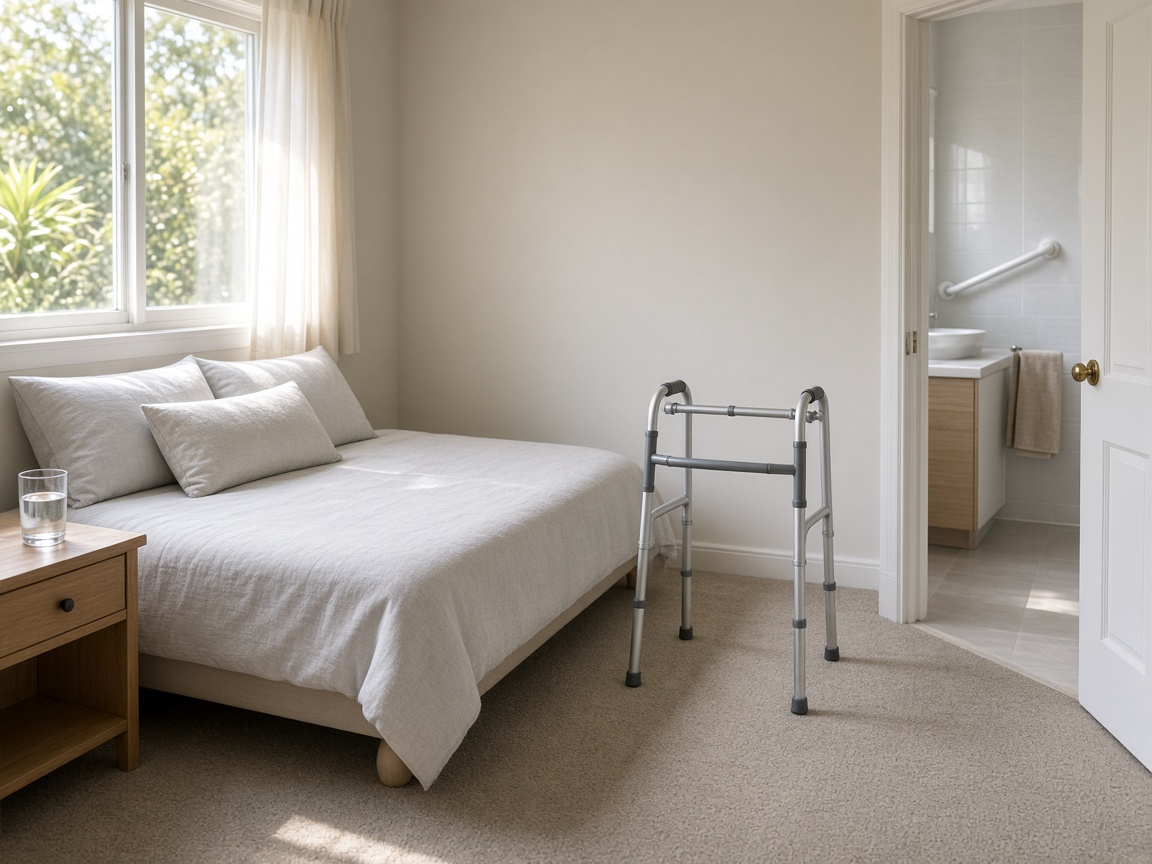
Plan the length of the visit around energy, not around the family's wish for a full traditional day. Many people do well with a late-morning arrival, lunch, a rest, and a return to the home in the mid-afternoon, before the evening slump. Overnight stays need a ground-floor bed, a clear path to a toilet, lighting for the night, and a plan for who is awake enough to help at 2am. If that is not in place, a shorter visit is the kinder choice.
Dementia, sundowning and a house that has changed
For a person living with dementia, a family home can be a deep comfort, or it can be confusing, especially if the house has been renovated, emptied or filled with new faces. Dementia Australia has guidance on supporting a person at home and during celebrations, and our article on sundowning in nursing homes explains why late afternoon is often the hardest part of the day. Arrive earlier rather than later. Keep the guest list smaller than your instinct suggests. Have a quiet room, a familiar object from the aged care home, and a clear plan to return if the person becomes distressed.
Do not test the person with surprises, quizzes about who everyone is, or a tight timetable of visitors. Use names, offer one choice at a time, and keep the noise down. If the person asks to go "home" meaning the aged care home, that is not a failure of the day. It is information. Take them back, calmly, and tell the staff what you observed.
An illustrative example, not a record of a named family: a daughter in Ashfield brings her father home for Christmas lunch. He is settled at the table until mid-afternoon, when the room gets loud and the light changes. He becomes restless and asks for his own chair, meaning the one in his room at the home. She cuts dessert short, drives him back, and hands over the pharmacist-labelled pack with a note of what he ate and how he was. The visit was a success because it ended at the right time, not because it lasted until night.
Transport, the house, and what to do if something goes wrong
Think through the journey before you think through the menu. How will the person get from the aged care home to the car, and from the car to your door, in December heat, and if they use a wheelchair or a frame, can they transfer safely, with shade at both ends? Book a wheelchair taxi or a community transport service if your own car is not suitable, and allow more time than a healthy adult would need. Take a hat, water if they can drink it, and any usual cushion or belt. Do not leave a frail person sitting in a hot vehicle while you load presents.
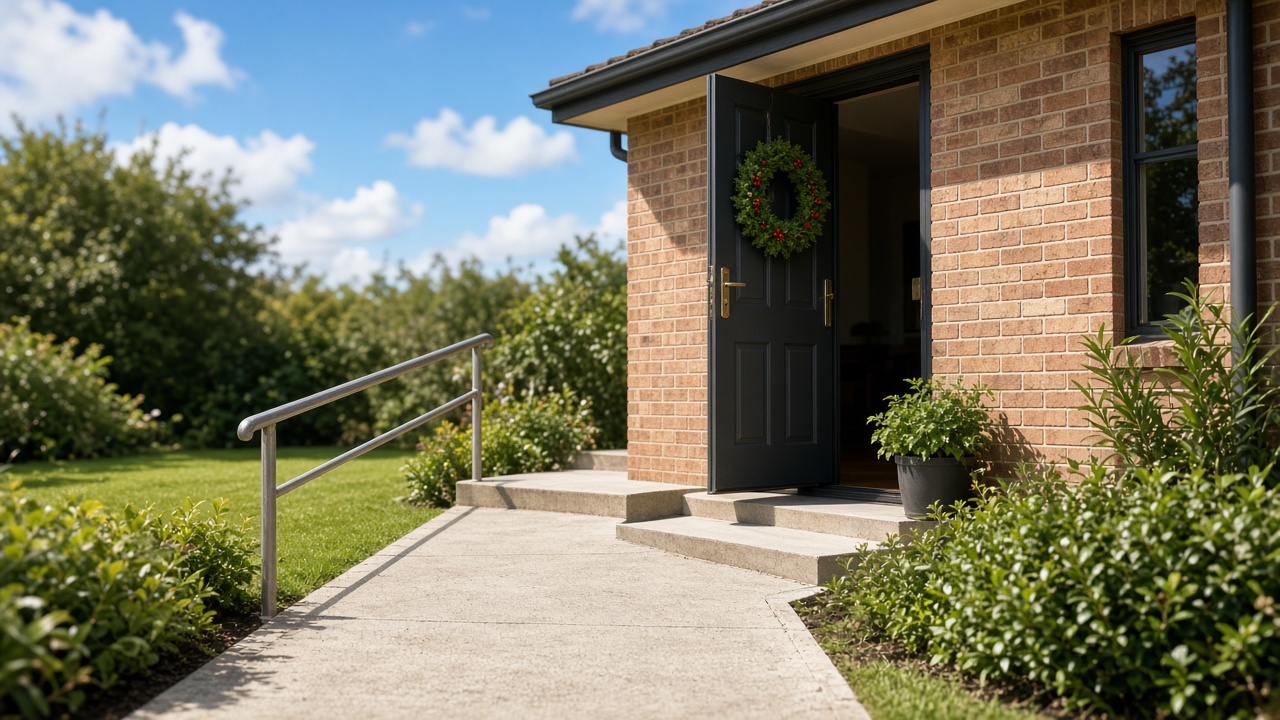
At your house, walk the route the week before. A loose mat, a low coffee table, a wet bathroom floor or a flight of stairs can undo a careful day. A clear path, a sturdy chair with arms, and a toilet they can reach without climbing are more useful than decorations. If you do not have those things, it may be better to visit at the aged care home this year, or to use a short outing to a cool, accessible place, and to compare homes and visiting arrangements if access has become a longer-term problem.
If the person becomes unwell, falls, or is not their usual self, do not wait it out because it is Christmas. Call 000 if it is an emergency, tell the ambulance and the hospital that the person lives in residential aged care, and take the medication list and any advance care directive with you. Tell the aged care home as soon as you can. Hospital leave, as My Aged Care describes it, is the category that then applies, and usual fees continue. Our guide to a hospital discharge into aged care in NSW is there if a return to the home has to be arranged from a ward rather than from your living room.
Bring a written sheet: the person's full name and date of birth, the aged care home's phone number, the GP, allergies, the medication list, and who has authority to make decisions. You hope not to use it. You will be glad it is in the bag if you need it. For questions about rights, leave or a disagreement with a provider, the home should be the first conversation, and My Aged Care and the Aged Care Quality and Safety Commission are there if you need a further step. Our article on nursing home resident rights sets out that path in more detail.
If a Christmas at home is not realistic this year, that is not a failure. A well-planned visit at the facility, a video call at the usual lunchtime, or a short outing in the cool of the morning can still be a good day. Families who are still looking for a home before Christmas, or weighing respite against permanent care, should be careful not to rush a first overnight leave in a new place. Let the person settle, then plan a visit that matches their energy.
Staff at the home know the person's usual morning routine, how they wake, and how they travel. Ask them, frankly, whether a Christmas Day at your house is realistic this year, and accept a shorter plan if they have doubts. A good facility would rather help you design a two-hour visit that works than watch you attempt a full day that ends in a fall or a distressed return after dark.
Nursing Home Match is a free, independent way to compare aged care homes on official Australian ratings. If Christmas has made you look again at location, visiting hours or the way a home supports time with family, you can search and compare without signing up, and take those questions into a tour in the new year.
Planning care around Christmas? Compare aged care homes on Nursing Home Match.
Planning care around Christmas? Compare aged care homes on Nursing Home Match.Frequently Asked Questions
Authoritative sources
Figures, rules and claims in this post are drawn from these official and independent sources.
- Managing your aged care home services
My Aged Care
- Know your rights
My Aged Care
- Residential care facilities
NSW Health
- Beat the Heat
NSW Health
- Dementia Australia
Dementia Australia
Related guides on this site
More from the blog


About this post
Written and reviewed by the Nursing Home Match. We update posts as the underlying rules and data change. This post is general information, not personal medical, financial or legal advice, always confirm details on Medicare.gov Care Compare or My Aged Care before making decisions.