Sundowning in nursing homes: a family action plan
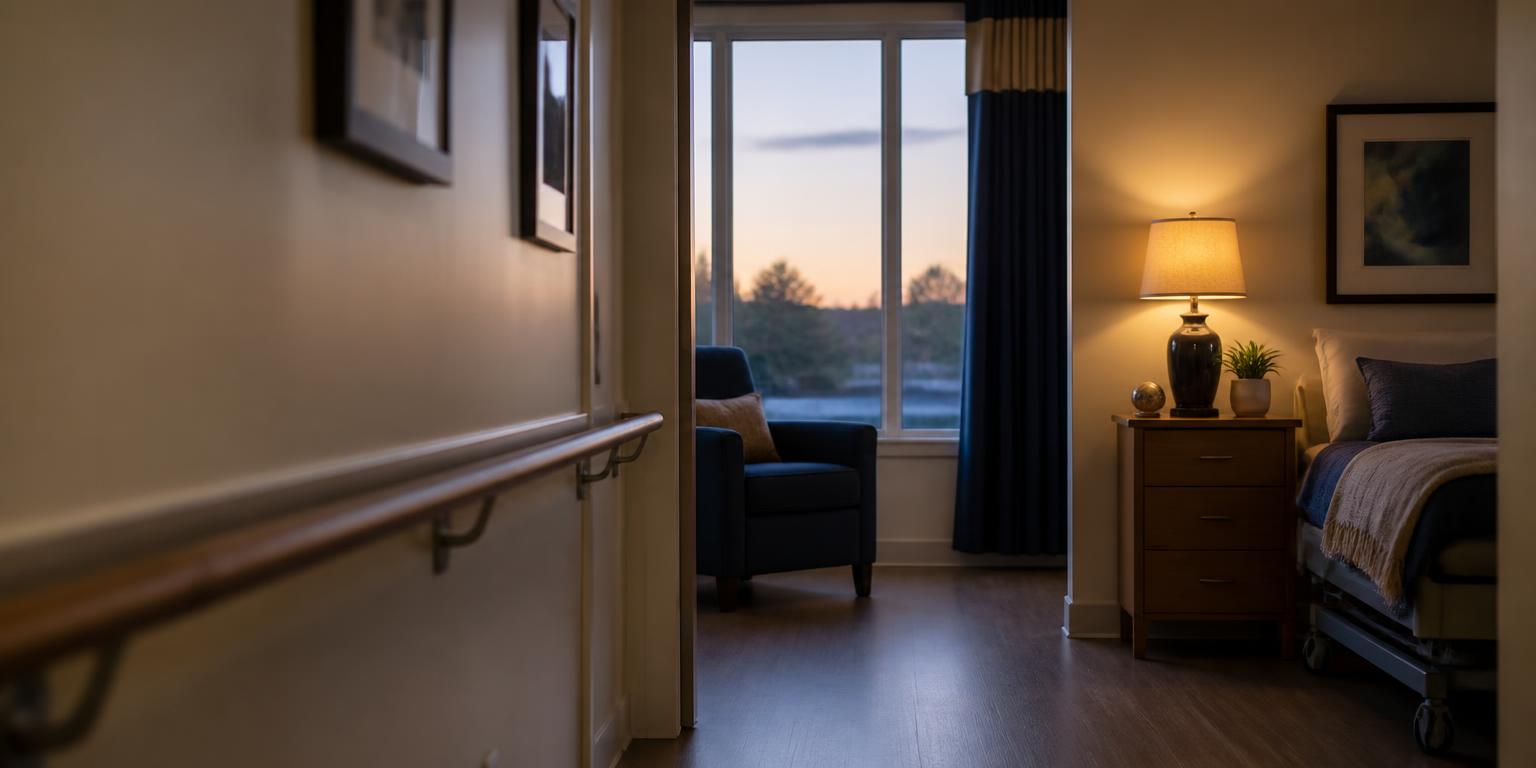
Evenings in a nursing home change shape in the second half of August. The dining room that felt bright at 6pm in June now needs the overhead lights on, shift change falls closer to dusk, and the corridor that was calm all summer starts filling with residents who want to go home, look for a mother who died decades ago, or pace the same twenty meters for an hour. Families notice it first on visits: the parent who was settled at lunch is a different person at five. Staff call it sundowning, say it is common, and move on. That answer is true and unhelpful. Sundowning is real, it follows the daylight, and it responds well to a handful of changes that cost nothing. It also masks a genuine medical emergency often enough that no family should accept it as an explanation without asking a few questions first. This guide covers what the evidence actually shows, what a well-run facility does about it, and the exact requests to make before the clocks change on 1 November.
What sundowning actually means
Sundowning describes a cluster of behaviors that get predictably worse in the late afternoon and early evening: agitation, restlessness, pacing, calling out, suspicion, resistance to care, or a strong urge to leave. It is a descriptive pattern rather than a formal diagnosis, which is why no two clinicians define it identically and why prevalence estimates range from roughly one in five to one in two people with dementia. The Alzheimer's Association explains sundowning and sleep changes as part of the wider disruption dementia causes to the body clock. The key word is predictable. If the behavior arrives at roughly the same hour, most days, and eases overnight or by morning, the pattern fits.
Why it gets worse from late August
The mechanism most researchers point to is circadian: damage to the suprachiasmatic nucleus, the small brain region that keeps the sleep and wake cycle anchored to light, leaves the internal clock drifting without a strong daily signal. Reduced evening light, fatigue accumulated across the day, low blood sugar before dinner and a noisy shift handover all pile onto that weak signal at the same hour. A clinical review of sundowning in dementia sets out the evidence for circadian disruption and the environmental factors that amplify it. Late summer is when the daily light dose starts shrinking fast in most of the country, and the drop accelerates through October. Families who wait until the November clock change to raise this have already lost the easiest ten weeks to fix it.
The first question: is this sundowning or delirium
This is the distinction that matters most and the one most often skipped. Sundowning builds gradually over weeks or months and follows the clock. Delirium arrives over hours or a few days, fluctuates wildly, often includes reduced alertness or hallucinations, and is caused by something physical: a urinary tract infection, pneumonia, dehydration, untreated pain, constipation, urinary retention, or a new medication. Cleveland Clinic's overview of sundown syndrome lists the reversible triggers worth ruling out. If a resident who has never sundowned suddenly does, treat it as a medical event, ask for vital signs, a urinalysis and a medication review the same day, and put the request in writing.
What good facilities do before reaching for medication
The interventions with the best evidence and the lowest risk are environmental and behavioral, and a competent dementia unit runs them as routine rather than as a favor.
The low-cost changes that reduce evening agitation
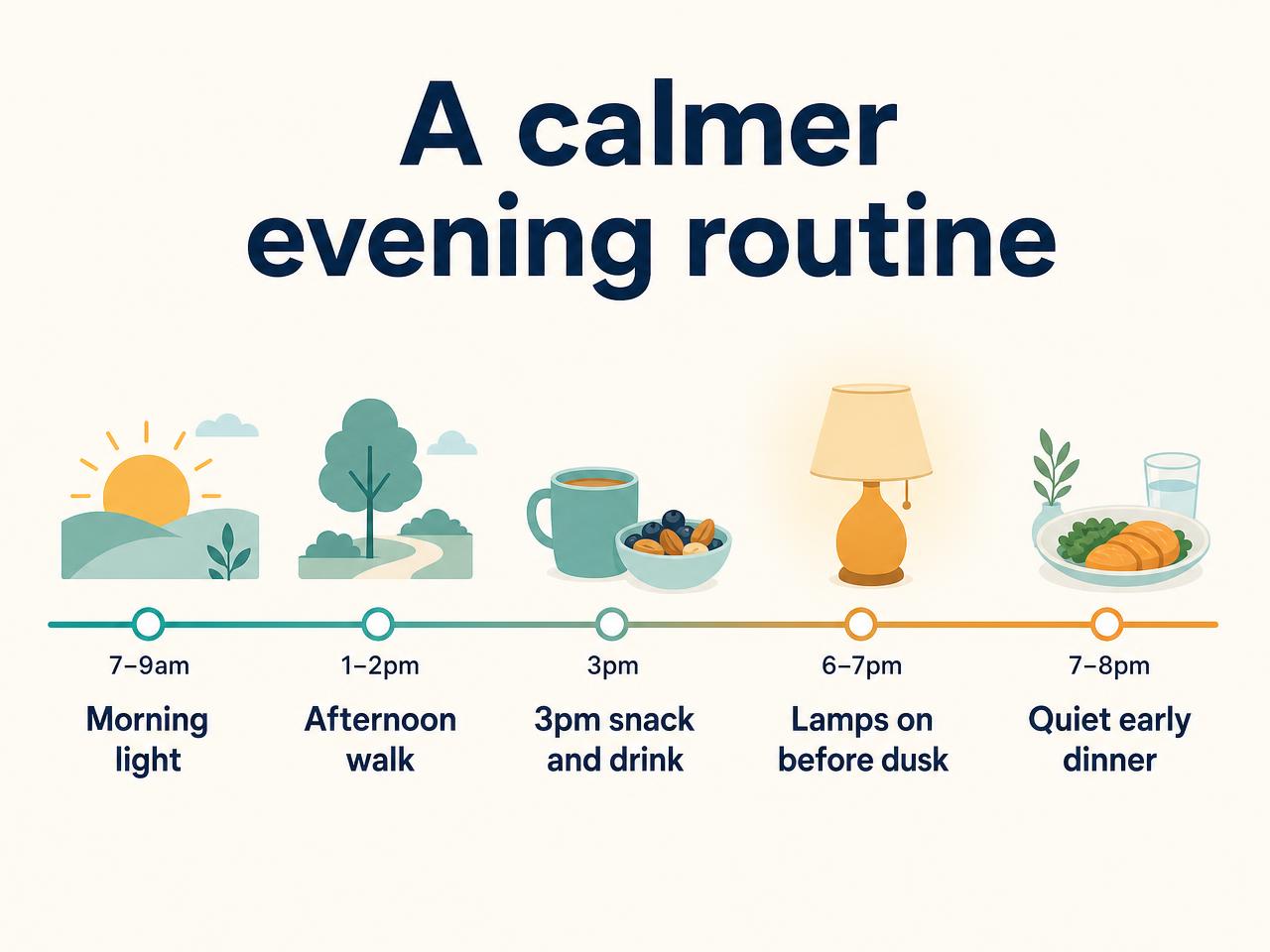
None of the effective measures require new equipment or extra headcount, which is why a unit that has not tried them is telling you something about its dementia training. The core set is light, movement, food and drink, noise control and predictability, applied at fixed times every day rather than in response to a crisis. The National Institute on Aging guidance on agitation and sundowning sets out the same list for home carers, and it transfers directly to a facility. Ask the charge nurse which of them are written into your parent's daily routine, and ask to see where that is recorded.
A practical checklist to hand the care team
Bright light in the morning, ideally by a window or in a courtyard for thirty minutes. Physical activity in the early afternoon so fatigue lands before dinner rather than after it. A snack and a drink around 3pm, because low blood sugar and mild dehydration both look like agitation. Lamps and overhead lights switched on before dusk rather than after, so the room never passes through a dim shadowy stage. Television off, radio low and staff conversation kept away from the doorway during the difficult hour. Caffeine stopped after midday, naps kept short and before 2pm, and the same two or three carers assigned to the resident wherever rostering allows.
Why consistent staff assignment matters more than families expect
A resident with moderate dementia cannot form a new working relationship every shift, and a stranger arriving to help with toileting at the exact hour their brain is least able to interpret the situation is a reliable trigger for resistance and shouting. Facilities that use permanent assignment, where the same aides return to the same residents, report fewer evening incidents and fewer refusals of care. Ask the director of nursing how many different aides worked with your parent in the past fourteen days. If the answer is more than five, the evening pattern has a staffing explanation as much as a neurological one. Staffing levels and turnover for any facility are published on Medicare Care Compare, and our post on the nursing home staffing crisis explains how to read those figures.
Medication: what the rules actually allow
Antipsychotics are not approved for treating dementia-related behavior, carry a boxed warning about increased death in older adults with dementia, and are still used more often than they should be during the evening hours. Federal regulation at 42 CFR 483.45 on unnecessary drugs requires a documented clinical indication, the smallest effective dose, monitoring and attempts at gradual dose reduction. In practice that means the facility must show what non-drug approaches were tried first and why they failed. Families have the right to be informed before a new psychoactive medication starts and to refuse it on the resident's behalf when they hold that authority. Our guide to antipsychotic use in nursing homes covers the exact questions to ask at a care conference.
Sleep medication is rarely the answer either
Sedative hypnotics, antihistamines such as diphenhydramine and older tricyclics all worsen confusion, dry the mouth, slow the bladder and roughly double fall risk in the small hours. A resident sedated at 7pm frequently wakes disoriented at 1am and falls on the way to the bathroom, which converts an agitation problem into a fracture. Harvard Health's summary of late-day symptoms explains why sleep hygiene and light do better than sedation. If sleep is genuinely broken, ask for a two-week sleep and behavior log before any prescription, and read our post on falls prevention alongside it.
How to visit during the sundowning window
Families often make the hour harder without meaning to. Arriving at 5pm with three relatives, asking questions that test memory, and announcing a departure time all raise the demand on a brain that is already struggling. Try one visitor at a time during the difficult hour, keep coats and handbags out of sight because packed bags read as leaving, and switch from correcting to joining: if your mother says she needs to collect the children, ask about the children rather than explaining they are fifty. Bring something rhythmic and familiar, such as folding towels, sorting cards or music from her twenties, because repetitive activity settles agitation better than conversation. If the visit is going badly, leave calmly and come back in the morning when she is at her best.
Getting it into the care plan in writing
Everything above is worth little until it appears in the care plan, because that document is what the next shift reads. Under 42 CFR 483.10 on resident rights, a resident and their representative have the right to take part in care planning and to request a meeting. Ask for the plan to name the specific hour of difficulty, the triggers observed, the interventions to be tried in order, and who reviews the outcome. Request a copy afterwards and a follow-up date within thirty days. Our guide to nursing home resident rights sets out what the facility must provide when you ask.
When the building itself is the problem
Some sundowning is a design failure rather than a care failure. Long dim corridors with a bright window at one end create glare and shadow that a dementia-affected visual system reads as holes in the floor. Units with no secure outdoor space give a pacing resident nowhere to walk to. Buildings that run activity programs only until 3pm leave the hardest three hours of the day empty. On a tour, walk the dementia unit at 5pm rather than 11am, count how many residents are seated in front of a television, and look for whether lamps are on before dusk. Our tour red flags checklist covers what else that hour reveals.
What to do in the next two weeks
Book a care plan meeting now, while the evenings are still long enough to make the light changes count. Bring a written log of the past ten days: the time behavior started, what was happening in the room, what helped and what did not. Ask for one medical review to rule out infection, pain and constipation, and one environmental change list with named owners. Then set a review date before the clocks change on 1 November, because that single hour shift undoes a fortnight of progress in a lot of residents. If the facility resists all of it, that response is data about the building, and you can start comparing alternatives with our side-by-side comparison tool and search by city or state.
Frequently asked questions
Authoritative sources
Figures, rules and claims in this post are drawn from these official and independent sources.
- Coping With Agitation, Aggression, and Sundowning in Alzheimer's Disease
National Institute on Aging
- Sleep Issues and Sundowning
Alzheimer's Association
- Sundown Syndrome: causes, symptoms and treatment
Cleveland Clinic
- Sundowning in Dementia: Clinical Relevance, Pathophysiological Determinants, and Therapeutic Approaches
National Library of Medicine, PubMed Central
- Sundowning: what to know about late-day symptoms
Harvard Health Publishing
- 42 CFR 483.45: Pharmacy services and unnecessary drugs
Electronic Code of Federal Regulations
- 42 CFR 483.10: Resident rights
Electronic Code of Federal Regulations
- Care Compare: nursing home staffing and quality ratings
Medicare.gov, CMS
Related guides on this site
More from the blog


About this post
Written and reviewed by the Nursing Home Match editorial team. We update posts as the underlying rules and data change. This post is general information, not personal medical, financial or legal advice, always confirm details on Medicare.gov Care Compare or My Aged Care before making decisions.