Nursing home falls: prevention and what to do after one
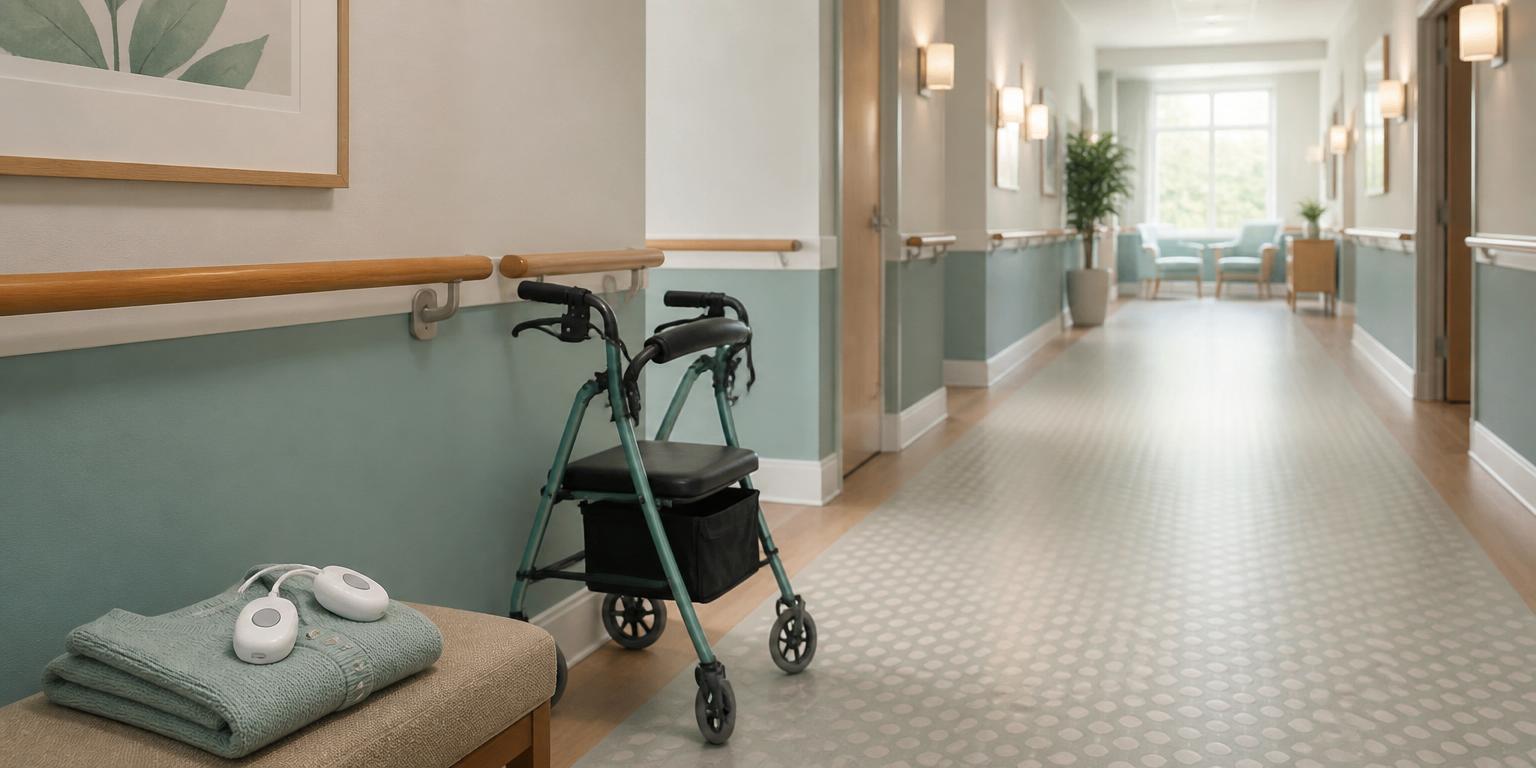
A fall inside a nursing home is rarely a single moment. It is usually the visible end of a chain of quiet decisions that started days earlier: a new sedating medication, a bathroom trip at 3 am with no aide on the floor, a pair of slippers with worn soles, a call light that took nine minutes to answer. The Centers for Disease Control and Prevention estimates that half of the roughly 1.3 million residents in US nursing homes fall at least once each year, and one in three of those falls causes an injury serious enough to need medical care. Hip fractures are the worst outcome; a resident over 80 who breaks a hip inside a facility has more than a one in three chance of dying within twelve months. This 2026 guide walks through what the federal rules now expect of every facility, the four low-tech interventions that resolve most preventable falls, the questions to ask on a tour, and the exact steps families should take in the first 24 hours after a fall.
How common falls are, and why the number is higher than families think
The CDC's facts about falls put the average annual fall rate at 2.6 falls per resident in long-term care, which is more than double the rate for community-dwelling older adults. The gap has three drivers. Residents are frailer, with an average of five chronic conditions and a median age of 82. Environments change; a new bathroom layout, an unfamiliar bed height, or a walker parked out of reach turns a routine trip into a fall risk. And staffing is thinner at night, when a disproportionate share of falls happen between 10 pm and 6 am. The AHRQ long-term care patient safety resources cover the evidence base in detail. What families should take away is that a facility reporting a fall rate below one per resident per year is either exceptional or under-reporting, and the second possibility is worth checking against the CMS inspection record.
What CMS Tag F689 now requires of every facility
The federal enforcement rule for falls is 42 CFR 483.25(d), operationalised through CMS Tag F689, Free of Accident Hazards, Supervision and Devices. The State Operations Manual Appendix PP sets out what surveyors look for. Every resident must have a fall-risk assessment completed on admission and updated after any significant change in condition. Every resident identified as at risk must have a written, individualised care plan within 14 days. Every fall must generate an incident report, a root-cause review, and an update to the care plan within 24 hours. F689 is one of the ten most commonly cited deficiencies in the country, and a home with three or more F689 citations across the last three surveys is a home whose accident prevention process is not working. Families can pull that history in two minutes from Medicare.gov Care Compare by opening the Health Inspections tab and scanning the deficiency list.
The four low-tech interventions that resolve most preventable falls
The peer-reviewed evidence on fall prevention in long-term care is unusually consistent, and the highest-impact interventions are not high-tech. Non-slip footwear is first; residents in worn slippers, socks without grips, or hospital-issued paper booties fall at roughly twice the rate of residents in properly fitted grip socks or supportive shoes. A bed or chair pressure sensor is second; when a resident starts to stand, the sensor alerts staff before the transfer is complete. A working, within-reach call pendant is third; a call bell mounted on the wall next to the head of the bed is useless to a resident already on the floor. A medication review is fourth; the Beers Criteria maintained by the American Geriatrics Society lists the drug classes most linked to falls, and benzodiazepines, older antihistamines, sedating antipsychotics and some blood pressure agents together account for most medication-linked falls in long-term care. A quarterly care conference is the right venue to ask whether every prescription on that list is still needed.
What a good fall-risk care plan actually contains
A care plan is not a form; it is a document that names the specific risk, the specific interventions and the specific staff responsible. A strong plan lists the resident's baseline gait and transfer status, the assistive device in use, the footwear worn day and night, the bathroom-toileting schedule, the bed height and rail configuration, the sensor and call-system setup, the medications flagged as fall-linked and the review date, and the family contact protocol after any fall. It also names what does not work: which prompts the resident ignores, which times of day carry higher risk, and which staff assignments the resident responds to best. If the plan you are shown is a generic checklist with the resident's name written at the top, the plan is a paper exercise. Ask for a revision using the Minimum Data Set (MDS) 3.0 items, which the CMS MDS resident assessment manual requires the facility to complete anyway.

The first 24 hours after a fall: what families should do
The first phone call is stressful, and there are five things worth doing in order. First, ask for the facts already documented: time of the fall, location, who found the resident, current vital signs, injuries observed, imaging ordered, and current level of consciousness. Second, ask whether the physician and the pharmacist have been notified, and when. Under 42 CFR 483.10, the facility must notify the resident's representative promptly, and delays of more than a few hours are a legitimate complaint. Third, request a copy of the incident report and the updated care plan within the two-working-day window resident rights allow. Fourth, ask what changed in the environment or the routine before the fall: a new medication, a new roommate, a shift change, a bathroom trip. Fifth, ask what will be different tomorrow. If nothing changes after a fall, the same fall will happen again. If the answers are vague or defensive, the long-term care ombudsman can attend the next meeting with you at no cost.
Restraints, alarms and the CMS rules that limit both
For decades, side rails and lap belts were the default response to a fall risk. The federal rules changed that. Under 42 CFR 483.10(e) and CMS Tag F604, a physical restraint may only be used to treat a resident's medical symptoms, never for staff convenience or discipline, and only after less restrictive alternatives have failed and been documented. Bed rails are considered restraints when they restrict the resident's freedom of movement or normal access to the body. Personal audible alarms, once common, are now discouraged because they startle residents into worse falls and provide no benefit over silent nurse-station alerts; the CMS guidance on person-centred care treats routine use of personal alarms as a red flag. A facility that describes bed rails or lap belts as its main fall prevention strategy is a facility whose training has not kept up with the evidence, and the resident's care plan should reflect that.
Fractures, head injuries and the return-from-hospital risk
Not every fall causes a serious injury, but the ones that do are worth planning for. Hip fractures dominate the injury statistics; the National Institute on Aging's fall prevention resources note that adults over 80 have a one-year mortality rate above 30% after a hip fracture, driven by surgery risk, pneumonia and loss of mobility. Head injuries are the second concern; a resident on a blood thinner who hits their head must have neurological checks every 15 to 30 minutes for at least two hours per the standard nursing home protocol, and any change in consciousness is a transfer-to-emergency-department event. The higher-risk window is not the fall itself but the return from hospital, when the resident is deconditioned, on new medications and unfamiliar with an adjusted environment. A skilled nursing readmission after a fracture is the moment to insist on a rewritten care plan, not a copy of the old one.
How to check a home's fall record on a tour
Six questions on a tour will separate a fall-aware facility from a paperwork one. What is the fall rate per resident year, and how does it compare to the state average. How many F689 citations in the last three surveys, and what was the corrective action. What is the average call-light response time on the night shift, and how is it measured. What footwear is standard for residents on ambulation, and does the facility supply it or does the family. What is the process for reviewing medications after a fall, and who signs off. Who calls the family after a fall, when, and what information is shared. A director of nursing who can answer all six from memory runs a facility whose fall prevention program is real. A tour that redirects to brochures and photos is a tour where the numbers are not being tracked. The questions to ask on a nursing home tour guide covers the broader tour checklist. Families can also cross-check the answers against warning signs of nursing home neglect.
Frequently asked questions
Authoritative sources
Figures, rules and claims in this post are drawn from these official and independent sources.
- Facts about falls
Centers for Disease Control and Prevention
- Long-term care patient safety resources
Agency for Healthcare Research and Quality
- State Operations Manual Appendix PP, Guidance to Surveyors for Long Term Care Facilities
Centers for Medicare and Medicaid Services
- Medicare.gov Care Compare
Centers for Medicare and Medicaid Services
- American Geriatrics Society Beers Criteria for Potentially Inappropriate Medication Use in Older Adults
American Geriatrics Society
- Older adults and balance problems
National Institute on Aging, NIH
- MDS 3.0 RAI Manual
Centers for Medicare and Medicaid Services
Related guides on this site
More from the blog


About this post
Written and reviewed by the Nursing Home Match editorial team. We update posts as the underlying rules and data change. This post is general information, not personal medical, financial or legal advice, always confirm details on Medicare.gov Care Compare or My Aged Care before making decisions.