Aged care homes in Sydney: finding a place before Christmas

Somewhere between the Melbourne Cup sweep and the first Christmas carols in the Parramatta food court, a lot of Sydney families end up having the same talk at the kitchen table. Mum had another fall in October. Dad is not coping with her care on his own, and the drive from Penrith to Hornsby every second day is wearing everyone down. Someone says the words out loud: maybe it is time to look at aged care homes.
If that is your family this month, you are not late and you are not alone. November and December are busy months for Sydney aged care, because holidays bring families together and make changes at home hard to ignore. Carers book trips, hospitals try to discharge older patients before the break, and homes juggle staff leave. This guide walks through what to do in the next six weeks: getting the assessment moving, comparing homes across Sydney's regions, reading Star Ratings properly, finding an actual vacancy, using Christmas respite as a trial run, and asking the summer questions that matter in a Sydney heatwave.
Why November is the month Sydney families start looking
Most families do not plan a move into aged care. It arrives after a fall, a hospital stay or a carer who quietly runs out of steam. Those moments often bunch up at the end of the year, when adult children fly home and see a parent up close for the first time in months.
The calendar adds pressure. Many homes run reduced office hours between Christmas and the first week of January, so tours, admission meetings and paperwork slow down. If you start ringing around on 20 December, you may not speak to a decision maker until mid-January. Starting in early November gives you roughly six working weeks to get an assessment, tour a shortlist and, if you need it, lock in respite over the break.
Then there is the weather. Sydney summers bring heatwaves, storms and, in some years, bushfire smoke from the Blue Mountains. An older person struggling at home in spring is more vulnerable once the hot days arrive.
Get the assessment sorted before you fall in love with a home
Every government-funded aged care home in Australia needs to see an approval before it can offer a permanent place. That approval comes from an aged care assessment, arranged through My Aged Care on 1800 200 422 (Monday to Friday 8am to 8pm, Saturday 10am to 2pm). Our guide to the ACAT assessment explains what the assessor asks, how long it can take and how to prepare your parent for the conversation.
According to My Aged Care's overview of aged care homes, eligibility for a place depends on care needs and age, generally 65 or over, or 50 or over for Aboriginal and Torres Strait Islander people and people who are homeless or at risk of homelessness. Your parent's bank balance does not decide whether they can enter a home. It decides how much they pay.
A few practical tips make the assessment go smoother:
- Have a family member present, ideally the person who sees your parent most days.
- Write down the last three months of falls, hospital visits, medication changes and nights of broken sleep.
- Ask for respite to be assessed at the same time, so you have options over Christmas.
- If your parent is in hospital, ask the ward social worker about an assessment before discharge.
Start with the map: comparing Sydney's aged care regions
Sydney is not one aged care market. It is several, and the right home is usually the one the family can visit easily. On our February 2026 extract of government data there are 445 residential aged care homes across Greater Sydney with an average Star Rating of 3.7, ahead of the national average of 3.1. You can compare all aged care homes in Sydney by rating, suburb and provider, then narrow down by region.
Start with the suburb of the person who will visit most, not the suburb your parent lived in for forty years. A home twenty minutes from a daughter in Castle Hill will get more visits, more small check-ins and more early warnings than a highly rated home an hour away across the bridge.
North Shore, Northern Beaches and the Hills fringe
Aged care homes in Northern Sydney make up the biggest group, with 103 homes from Mosman to Wahroonga and Avalon Beach. Demand for well-rated homes on the upper North Shore can be strong, so get on several waiting lists rather than one.
Parramatta, Blacktown and the west
There are 65 aged care homes in Western Sydney, averaging 3.8 stars, across 36 suburbs including Blacktown, Auburn, Northmead and Rooty Hill. Many families in the west find good options within a short drive.
Eastern suburbs and the Sutherland Shire
The South East Sydney region has 98 homes from Rose Bay and Randwick down to Sutherland and Miranda. Browse aged care homes in South East Sydney if your family is spread between the city and the Shire.
Reading Star Ratings without getting lost in the numbers
The Australian Government's Star Ratings for residential aged care give every home an overall rating from one to five, plus four sub-categories: Residents' Experience, Compliance, Staffing and Quality Measures. The department refreshes the data regularly, and the most recent update was published in October 2026, so check the current figure before you tour.
Do not stop at the headline number. On our data, 78 per cent of New South Wales homes sit at four stars, so the overall rating alone will not separate your shortlist. Open the sub-categories and look for the weak spot. A four-star home with a two-star Staffing score may feel stretched on a busy afternoon shift, while a home with strong Residents' Experience tells you that people living there actually like it.
Our Star Ratings explained guide shows how each sub-category is calculated. Use the ratings to build a shortlist, then let your visits make the final call.
How to find a vacancy when every home says waiting list
You find a home you like, you ring, and the answer is that there is a waiting list. That is normal, and it does not mean the door is shut. Beds open up without notice, and homes generally offer them to the people who are assessed, ready to move and easy to reach.
The My Aged Care Find a provider tool lets you filter by Star Rating, save up to 16 homes to a shortlist and compare three side by side. It is a good start, but the quickest way to learn about a real vacancy is still the phone:
- Ring the admissions or intake officer directly, not the general reception line, and ask what rooms are likely to come up before February.
- Ask to be added to the waiting list in writing and confirm what they need from you, such as the assessment approval and a contact person.
- Follow up politely every week or two. Homes remember the family who calls back.
- Tell them if you would accept a shared room or a different wing to start with, since that can shorten the wait.
What to ask on the first call
Ask whether the home has a secure dementia area if your parent needs one, whether it accepts residents on the basic daily fee only, and what the room price is as a lump sum and as a daily payment. Ask, too, whether the home takes respite residents, since a respite stay can lead to a permanent place.
Christmas respite: a trial run that can turn into a place
For many Sydney families the most practical first step is residential respite. It gives the carer a genuine break, gives your parent a chance to try a home, and gives staff a chance to get to know them. Our guide to respite versus permanent care sets out the differences in cost, paperwork and rights.
According to My Aged Care's respite care information, residential respite is available for up to 63 days of subsidised care in a financial year, and it can be extended by 21 days at a time with further approval from the assessor.
The catch is availability. An approval for respite does not guarantee a bed, and not every home takes temporary residents. Christmas and January are peak times because so many carers travel, so book as early as you can and confirm the exact dates in writing. If something urgent happens, such as a carer suddenly falling ill, the Carer Gateway on 1800 422 737 can help arrange emergency respite.
Keep a tally of respite days used. The allowance resets on 1 July, so a long summer stay eats into days you might want again in autumn.
Summer questions every Sydney home should answer
A home that looks lovely on a mild November morning can feel very different on a 42 degree afternoon in Penrith. NSW Health's advice on heat risk for people over 65 explains that ageing bodies sweat less, feel thirst less and can be affected by common medicines such as diuretics. That makes heat planning a fair question for any home you are considering.
The Bureau of Meteorology runs its heatwave forecast service from early October to the end of March, and good homes watch it. When you tour, ask these questions and listen for specific answers rather than general reassurance:
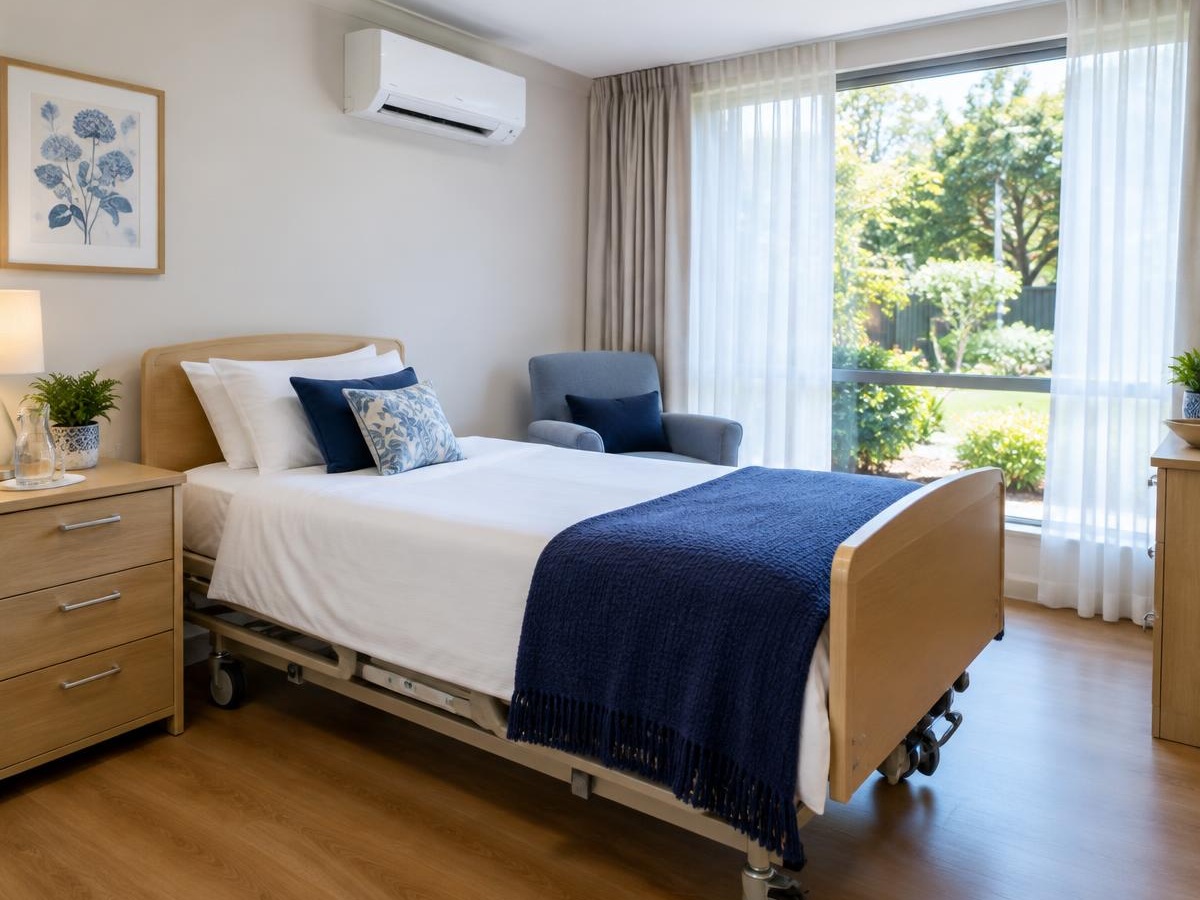
- Is every resident's room air-conditioned, or only the common areas?
- What happens on heatwave days with fluids, meals, outings and checks overnight?
- Is there backup power if a summer storm knocks out the electricity?
- How does the home protect residents when bushfire smoke settles over Sydney, and does it have an emergency and evacuation plan you can read?
- How many permanent staff are rostered over Christmas and New Year, and how much agency staff does the home expect to use?
- How will the home keep families updated if a respiratory outbreak closes visiting during the holidays?
Visit twice, once at a busy time
Book a formal tour, then drop in again around lunch or late afternoon. That second visit tells you more than any brochure. Bring a copy of our aged care home visit checklist so you remember to look at the small things, such as call bells, bathrooms and whether residents are up and dressed.
Money and paperwork to have on the kitchen table
You need a rough idea of costs before you start. Residents who entered care from 1 November 2025 are on the new fee arrangements, which include a basic daily fee, means-tested hotelling and non-clinical care contributions, and accommodation costs. Our article on the new Aged Care Act and what changed explains each charge in plain language.
The room price is the number that worries families most. Homes publish a lump sum price, and you can choose to pay it as a refundable deposit, a daily payment or a mix of both. Read our refundable accommodation deposit guide before you agree to anything, because the choice affects the family home, the pension and the estate.
Before Christmas, gather the documents that slow everything down when they are missing:
- Your parent's assessment approval letter and My Aged Care client number.
- Recent bank, super and pension statements for the Services Australia means assessment.
- Details of the family home, including whether a spouse or carer still lives there.
- Any enduring power of attorney or enduring guardianship papers.
- A current medication list and the name of the GP.
When something does not feel right
Most families end up relieved, but know where to go if a conversation stalls. The Older Persons Advocacy Network (OPAN) offers free, independent advocacy on 1800 700 600, and an advocate can sit with you in a meeting about fees, care plans or a room change.
If a home cannot give you a straight answer about staffing, fees or its heatwave plan, keep looking. The right home will answer your questions without making you feel like a nuisance.
Your next step this week
You do not have to solve everything before Christmas. This week, ring My Aged Care to begin the assessment, pick the region where your most regular visitor lives, and shortlist five homes using Star Ratings and their sub-categories. Next week, make the first round of calls and ask about respite over the holidays.
When you are ready, use Nursing Home Match to compare Sydney homes side by side on official Star Ratings, then request a tour or pricing straight from each home's page. A calm start in November usually means a far gentler January for everyone.
Frequently Asked Questions
Authoritative sources
Figures, rules and claims in this post are drawn from these official and independent sources.
- Aged care homes
My Aged Care
- Find a provider
My Aged Care
- Respite care
My Aged Care
- Star Ratings for residential aged care
Australian Government Department of Health, Disability and Ageing
- Heat risk: people over 65 years
NSW Health
- Heatwave forecasts
Bureau of Meteorology
- Older Persons Advocacy Network
OPAN
Related guides on this site
More from the blog


About this post
Written and reviewed by the Nursing Home Match editorial team. We update posts as the underlying rules and data change. This post is general information, not personal medical, financial or legal advice, always confirm details on Medicare.gov Care Compare or My Aged Care before making decisions.