Medicaid spend down for nursing home care, explained

The nursing home quotes $9,800 a month. Your father has $61,000 in a credit union account, a paid-off house and $2,190 of Social Security. A friend told him he has to be broke before Medicaid pays, so he has been sitting on that money and paying the bill himself while the balance drains at a rate that gives him six months. That advice is half right and expensive. Medicaid does have a hard asset limit for long-term care, and most single applicants must be down to about $2,000 in countable resources. What people miss is that the rules care about where the money went, not just whether it is gone. Spending it on his own care, his own debts, his own house and his own funeral is allowed. Handing $20,000 to a grandchild is not, and it will cost him months of unpaid nursing home fees. This post covers the 2026 figures, what counts and what does not, the order to spend in, and the paperwork to have ready before the January reset.
What a Medicaid spend down actually is
Medicaid pays for the largest share of long-stay nursing home care in the United States, and the Medicaid nursing facility benefit has two gates. The clinical gate asks whether the person needs a nursing facility level of care. The financial gate asks whether their income and countable resources are low enough. A spend down is the process of getting through that second gate legitimately by using the applicant's own money on the applicant's own needs until countable resources fall to the state limit. It is not a loophole and it is not asset hiding. Caseworkers expect it. What they audit is the paper trail. Every withdrawal above a few hundred dollars needs an invoice, a receipt or a contract attached to it, because an unexplained withdrawal is treated as a possible gift, and gifts trigger penalties. The mental shift that helps families most is this: stop thinking about the balance and start thinking about the direction. Money flowing toward the applicant's care and property is fine. Money flowing away from the applicant to other people is the problem.
The 2026 numbers that set the target
CMS updated the long-term care standards effective 1 January 2026, and these are the figures a caseworker will apply this year: SSI resource standard: $2,000 for an individual and $3,000 for a couple, which most states use as the countable asset limit for a nursing home applicant. Community spouse resource allowance: a minimum of $32,532 and a maximum of $162,660 that the spouse at home is allowed to keep. Minimum monthly maintenance needs allowance for the spouse at home: $2,643.75 in most states, rising to $3,303.75 in Alaska and $3,040.00 in Hawaii. Maximum monthly maintenance needs allowance: $4,066.50. Home equity limit: states set a figure between $752,000 and $1,130,000, above which the home stops being exempt. SSI federal benefit rate: $994 a month for an individual, which matters because roughly two thirds of states cap institutional income at 300 percent of it, giving a special income level near $2,982 a month. Those national figures come from the 2026 SSI and spousal impoverishment standards bulletin. Your state may sit at the top or the bottom of the allowed range, so confirm the local numbers before you plan around them.
Countable versus exempt: the only sorting that matters
A spend down works because most families hold more countable money than they realize and more exempt value than they use. Generally countable: checking and savings balances, certificates of deposit, stocks, bonds, mutual funds, a second vehicle, a vacant lot, cash value in whole life insurance above a small state threshold, and money in a revocable trust. Generally exempt in most states: the primary residence within the equity limit while a spouse, minor child or disabled child lives there or while the applicant intends to return, one vehicle regardless of value, household goods and personal effects, a modest burial fund or an irrevocable prepaid funeral contract, and term life insurance with no cash value. Retirement accounts are the item that varies most. Some states exempt an IRA in payout status, some count the full balance, and some count it only for the community spouse. Confirm that one locally before you touch it, because cashing out an IRA to spend down can create a tax bill large enough to undo the benefit. Our explainer on whether Medicaid can take your house covers what happens to exempt property later through estate recovery.
What you can safely spend the money on
The safest spending is anything that benefits the applicant and produces a receipt. Common items families use: The nursing home bill itself, at the private rate, for the months before eligibility begins. Outstanding debts in the applicant's name: credit cards, medical bills, a car loan, tax arrears, unpaid utilities. Dental work, hearing aids, glasses and podiatry, all of which Medicaid covers poorly or not at all. Home repairs and accessibility work on an exempt home: roof, wiring, plumbing, ramps, grab rails, a walk-in shower. A newer, more reliable vehicle if the household vehicle is failing and one car is exempt in your state. An irrevocable prepaid funeral and burial contract within the state limit, which removes a real future cost from the family. A private room upgrade, a personal care allowance top-up, or a geriatric care manager's fees. Legal and accounting fees for the Medicaid application and for updating a power of attorney or will. Two cautions. Buy things for the applicant, not for yourself, and never pay a family caregiver informally. Payments to relatives are treated as gifts unless there is a written personal care agreement signed before the work, with market-rate hourly pay and a log of hours.
The spend down mistakes that cost families months
Almost every penalty we see traces back to one of five moves: Gifting to children or grandchildren, including tuition help and holiday cash, in the belief that small amounts do not register. Adding a child's name to a bank account or a deed, which the state reads as a transfer of half or all of the asset. Selling the house to a relative at a family price rather than market value. Cashing an IRA in one tax year and creating a tax bill on top of the care bill. Paying a relative for past care with no written agreement in place beforehand. Medicaid reviews five years of financial history for institutional applicants, and any uncompensated transfer inside that window buys a penalty period during which Medicaid pays nothing even though the person is otherwise eligible. We walk through how the penalty is calculated in our guide to the Medicaid look-back period. Read the two rules as one system, because a spend down done in the wrong order can accidentally become a transfer.
How the look-back turns a spend down into a penalty
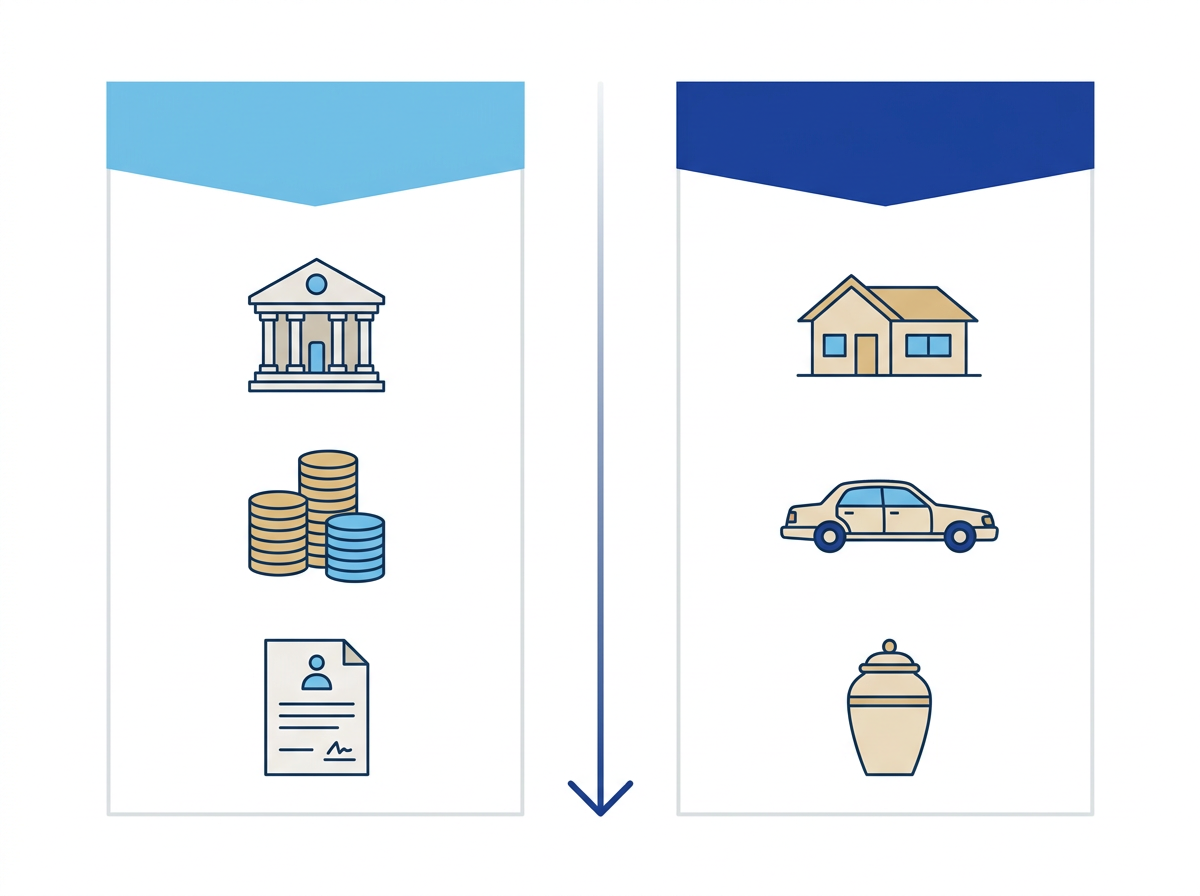
The distinction is compensation. When your father pays $9,800 for a month of care, he received something of equal value, so nothing is penalised. When he gives $9,800 to his daughter, he received nothing, so the state divides that amount by its average monthly private-pay nursing home rate and blocks Medicaid payment for the resulting number of months. The penalty does not start when the gift was made. It starts when the person is otherwise eligible and in the facility, which is precisely when the family has no money left to cover it. This is why the sequence matters. Pay institutional bills, medical debts and property costs first, document each one, and treat any payment to a person rather than a provider as something to run past an elder law attorney before the money moves. Certified elder law attorneys typically charge $4,000 to $8,000 for a full nursing home Medicaid case, and that fee is itself an allowable spend down item.
Married couples: the rules change completely
When one spouse enters a nursing home and the other stays at home, federal spousal impoverishment protections apply, and they are more generous than most families expect. On the resource side, the couple's countable assets are totalled as of the first day of institutionalisation and the spouse at home keeps a share, which in 2026 runs between $32,532 and $162,660 depending on the state and the total. On the income side, the applicant's income is directed to the facility, but the spouse at home can keep a monthly maintenance allowance and may claim a share of the applicant's income to reach it, up to $4,066.50 a month where housing and utility costs justify it. The official rules sit on the spousal impoverishment page. Two practical points. The snapshot date is fixed, so a couple planning a nursing home admission should get advice before the admission rather than after it. And the spouse at home should update their will and beneficiary designations, because leaving assets outright to an institutionalized spouse can disqualify them again.
Income spend down: the medically needy route
Assets are only half the test. Roughly two thirds of states use an income cap for institutional Medicaid, commonly 300 percent of the SSI federal benefit rate, which in 2026 puts the ceiling near $2,982 a month. The rest operate medically needy or share-of-cost programs, where a person whose income exceeds the limit can still qualify by spending the excess on medical bills each month or each budget period. Think of it as a deductible. If the medically needy income level is $600 and your mother receives $2,190 in Social Security, she contributes the difference toward her care and Medicaid picks up the rest once the obligation is met. In income cap states, a Qualified Income Trust, often called a Miller trust, is the standard fix: income above the cap is deposited into the trust each month and used for care, which brings countable income under the ceiling. These trusts must be set up correctly and funded every single month, so this is one of the few places where do-it-yourself paperwork usually fails.
What happens to income once Medicaid starts paying
Families are often surprised that Medicaid eligibility does not mean the resident keeps their pension. After approval, nearly all of the resident's monthly income goes to the facility as a patient liability, and they retain only a small personal needs allowance, which most states set between $30 and $75 a month. Deductions come off the top in a set order: the personal needs allowance, health insurance premiums including Medicare Part B and any Medigap policy, the spousal and family maintenance allowances if applicable, and certain unpaid medical expenses. Two consequences worth planning for. First, the personal needs allowance rarely covers haircuts, phone service, clothing and outings, so budget for the gap or use the hidden costs of nursing home care checklist before signing. Second, someone must keep paying the exempt home's taxes, insurance and utilities, because the resident's income is no longer available to do it.
Why September is the month to start
Three calendars converge in the autumn. Medicaid counts resources as of the first day of the month you are claiming, so a spend down finished on 29 September buys eligibility from 1 October, while the same work finished on 2 October costs another full month at the private rate, which at national average rates is between $8,600 and $10,600 for a semi-private room. Applications also take time: many states allow up to 45 days to process a long-term care application and often ask for a second round of documents, so a September filing with clean paperwork typically lands before the holidays rather than in the January backlog. And the federal standards reset every 1 January, which means a couple whose resource allowance was calculated on old figures may need a fresh snapshot. If a hospital discharge planner is already talking about a skilled stay, understand where Medicare stops and Medicaid begins by reading our Medicare versus Medicaid comparison this week rather than after day 100.
Documents to gather before you file
The single biggest cause of delay is missing paperwork, not ineligibility. Build one folder with: Five years of statements for every bank, brokerage and retirement account, including closed accounts. Proof of income: Social Security award letter, pension statements, annuity payments, rental income. Deeds, mortgage statements and the most recent property tax assessment for any real estate. Vehicle titles and registrations. Life insurance policies showing face value and any cash value. The long-term care insurance policy declarations page if there is one, which our long-term care insurance breakdown explains how to read. Receipts, invoices and contracts for every spend down purchase over roughly $500. Any trust documents, prepaid funeral contract, personal care agreement and the power of attorney. The facility's admission agreement and its private-pay rate schedule. Scan everything. States routinely ask for the same document twice, and a family that can email a numbered folder rather than rummage through drawers shortens the process by weeks.
Where to get free, unbiased help
You do not have to do this alone, and free help exists before you pay anyone. Your local Area Agency on Aging can be found through the Eldercare Locator and many run benefits counselling clinics. Your State Health Insurance Assistance Program gives free one-to-one counselling on how Medicare and Medicaid interact, which matters if the resident is also picking a Medicare plan during open enrollment from 15 October. Your state Medicaid agency publishes the local asset limit, the medically needy level and the penalty divisor, and the facility's own business office usually knows the caseworker handling its applications. For anything involving a house, a business, an annuity or a transfer already made, pay for a certified elder law attorney. The national overview of long-term care planning from the National Institute on Aging is a useful primer to read before that first meeting so you arrive with sharper questions.
Choosing a home that will still be right on Medicaid
A spend down is only worth doing if the building at the end of it is one you would choose. Two questions decide this. Does the facility accept Medicaid for long-stay residents, and does it accept it in the same room your parent moves into? Some homes hold a limited number of Medicaid-certified beds, and a private-pay resident can be asked to move rooms or buildings when they convert. Ask for that policy in writing before admission. Then compare on quality, because Medicaid pays the same rate to a one-star and a five-star home in the same county. Look at staffing hours per resident day, weekend staffing, and the health inspection history rather than the lobby. You can search nursing homes by city or state on this site and compare homes side by side on ratings, staffing and inspection results, then take the shortlist to the tour. Families who do the money work and the quality work in the same month end up with both a funded bed and a home they are comfortable visiting. Start this week: pull three months of statements, list every countable asset, book a call with your Area Agency on Aging, and shortlist two homes on this site that accept Medicaid for long stays. Getting those four things done in September is what buys an October start date instead of a January one.
Frequently asked questions
Authoritative sources
Figures, rules and claims in this post are drawn from these official and independent sources.
- 2026 SSI, Spousal Impoverishment, and Medicare Savings Program Resource Standards
Centers for Medicare & Medicaid Services
- Spousal Impoverishment
Medicaid.gov
- Nursing Facilities benefit
Medicaid.gov
- Seniors and Medicare and Medicaid Enrollees
Medicaid.gov
- SSI Resources
Social Security Administration
- Long-term care coverage
Medicare.gov
- What is long-term care?
National Institute on Aging
- Eldercare Locator
Administration for Community Living
- State Health Insurance Assistance Programs
SHIP National Technical Assistance Center
Related guides on this site
More from the blog


About this post
Written and reviewed by the Nursing Home Match editorial team. We update posts as the underlying rules and data change. This post is general information, not personal medical, financial or legal advice, always confirm details on Medicare.gov Care Compare or My Aged Care before making decisions.