Medicaid look-back period: the 5-year rule explained

Labor Day weekend is when the family conversation finally happens. Everyone is in one house, the summer visits have made the decline impossible to argue about, and someone raises the practical question of who pays for a nursing home at roughly $9,000 a month. Then a brother mentions that Mom transferred the deed to her house to him last spring, to keep it safe. The room goes quiet, because that single act may have just blocked Medicaid coverage for the better part of two years. This is the look-back period doing what it was designed to do. It is not a tax rule, it is not the same as estate recovery, and it does not care that the transfer felt sensible at the time. What follows is a plain reading of how the five-year rule works, how caseworkers calculate a penalty, which transfers are exempt, and what a family can still do once a gift is already in the past.
What the look-back period actually is
When someone applies for Medicaid to cover long-term nursing home care, the state does not just look at what they own today. It asks for financial records covering the previous 60 months and reviews every transfer out of the applicant's name. The legal basis sits in 42 U.S.C. 1396p, which requires states to impose a period of ineligibility when assets are disposed of for less than fair market value. California is the outlier with a shorter window under its own rules, and a small number of states apply different treatment to home care waivers. Everywhere else, assume 60 full months counted backward from the date the application is filed, not from the date of admission.
Why the rule exists
Nursing home Medicaid is a benefit for people with almost no assets. Single applicants in most states must be below roughly $2,000 in countable resources, with a modest monthly income cap and a personal needs allowance of a few dozen dollars. Congress added the transfer penalty because the eligibility test alone was easy to defeat. A person could give a house and a portfolio to their children on a Friday and file as impoverished on the Monday. The look-back closes that door by treating a recent giveaway as if the money were still available. Whether the family intended to qualify for Medicaid is irrelevant. The rule looks at the transaction, not the motive.
What counts as a transfer
Caseworkers are looking for value that left the applicant's control without something equivalent coming back. Common examples include cash gifts to children and grandchildren, adding a child's name to a deed, selling a car or a property to a relative below market value, forgiving a loan, paying a family member for care without a written contract, and large charitable donations. Church tithing and birthday checks get flagged too, because the reviewer sees a debit and no receipt. Ordinary living costs, genuine bills and market-rate purchases are not transfers. The burden of explaining a withdrawal sits with the applicant, which is why an unexplained $12,000 cash withdrawal from 2023 can hold up a file for weeks.
How the penalty is calculated
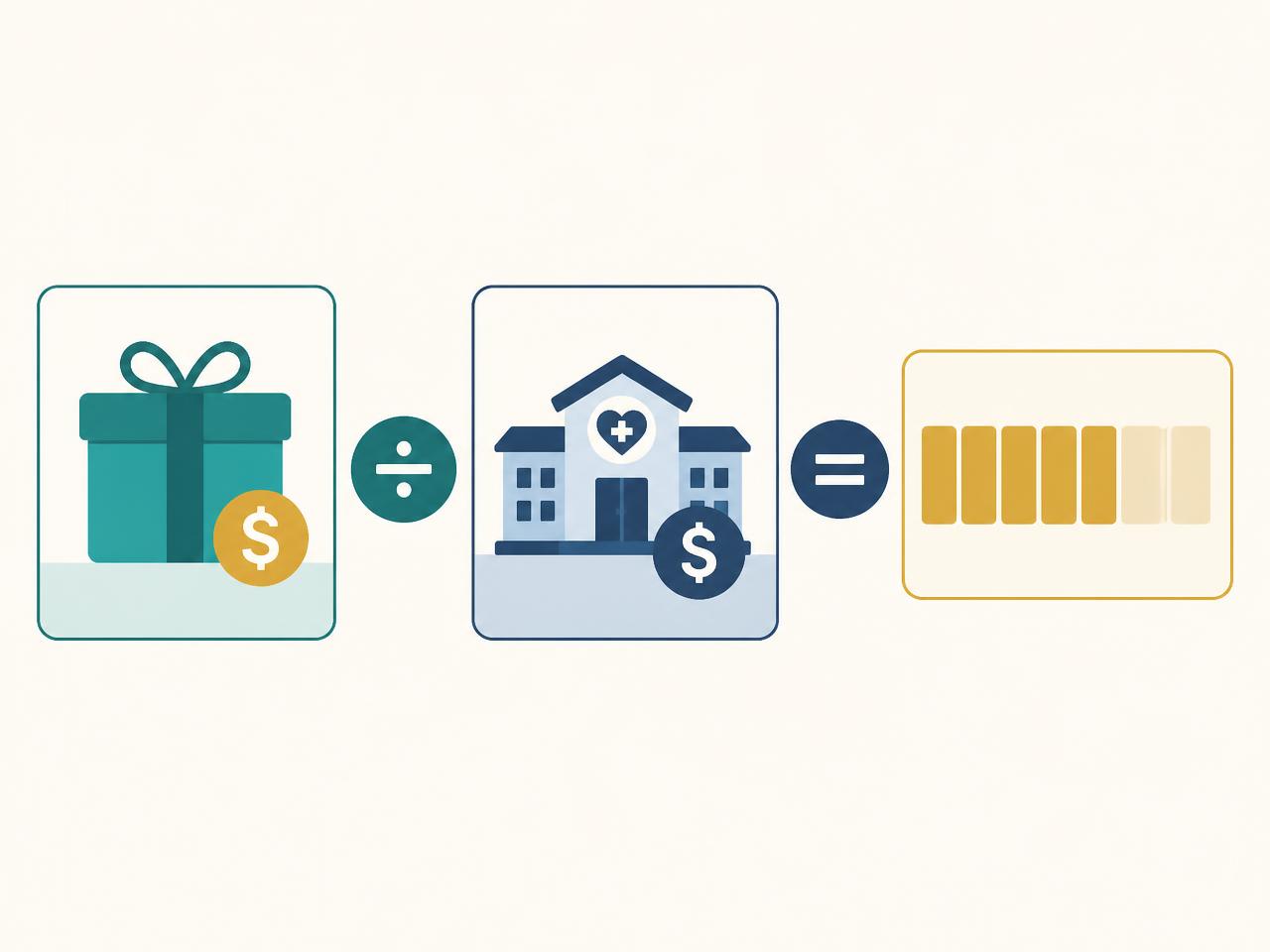
The penalty is not a fine and it is not a fixed number of months. The state adds up the value of all uncompensated transfers inside the window and divides it by the average monthly private-pay nursing home cost that the state publishes, called the penalty divisor. The result is the number of months Medicaid will not pay. If the divisor is $9,000 and the total given away is $90,000, the penalty is ten months. Some states round down, some carry the fractional month as a partial penalty. There is no cap. A $500,000 house transfer can generate a penalty measured in years.
When the clock starts, and why that hurts
This is the part families get wrong most often. The penalty does not begin on the day of the gift. It begins on the later of the transfer date or the date the applicant is in a nursing home, has spent down to the asset limit, and would otherwise be approved. In practice that means the penalty starts at the exact moment the person has no money left and no coverage. The facility still needs paying. The family that received the gift is usually the only source, and any transfer made five years and one week before filing sits entirely outside the window and cannot be penalised at all.
The gift tax exclusion trap
Many families believe that annual gifts under the IRS exclusion amount are automatically safe. They are not. The IRS gift tax rules govern whether a federal gift tax return is required. Medicaid is a separate program with separate rules and no equivalent allowance. A parent who gave each of three children the annual exclusion amount for four straight years has created a transfer of well over $200,000 in Medicaid's eyes, even though not a cent of gift tax was owed. Accountants who work in tax rather than elder law repeat this error constantly. Treat the two systems as unrelated.
Transfers that are exempt
Not every transfer triggers a penalty. Federal law protects several categories, and states apply them with local variations. The exemptions matter because they are frequently the difference between a workable plan and a two-year gap in coverage. Documentation is what makes them stick, so gather evidence before filing rather than after a denial.
The six main exemptions in detail
A transfer to a spouse, or to a third party for the sole benefit of a spouse, is exempt without limit. A transfer to a child who is blind or permanently disabled is exempt at any age. A transfer into a trust for the sole benefit of a disabled person under 65 is exempt. The home may pass to a child under 21, to a sibling with an equity interest who lived there for at least a year before admission, or to a caregiver child who lived in the home for two years immediately before admission and provided care that demonstrably delayed the move into a facility. That caregiver child exemption is the most valuable and the most often lost, because families rarely keep the physician letter and the dated care log that prove it.
What caseworkers ask to see
Expect a document list that feels intrusive. Five years of statements for every checking, savings, brokerage and retirement account, including closed ones. Deeds, settlement statements and title transfers. Life insurance policies with cash value. Vehicle titles. Tax returns. Any trust document. Records of annuity purchases. Statements from accounts held jointly with a child, since joint ownership often counts as fully available to the applicant. Assemble the file before applying. The application clock keeps running while the caseworker waits for a missing 2022 statement, and a file that stalls past the deadline is usually denied and has to be started again.
Legitimate ways to spend down
Spending money on the applicant's own benefit is not a transfer. Paying off a mortgage, a credit card or existing medical debt reduces countable assets without penalty. So do home repairs, a replacement vehicle, prepaid irrevocable funeral and burial contracts, dental work, hearing aids and better eyeglasses. A married couple can often move assets into the community spouse's protected resource allowance. Some families use a Medicaid-compliant immediate annuity to convert a lump sum into an income stream for the spouse at home. These strategies are state-specific and unforgiving of small drafting errors, so they belong with an elder law attorney rather than a template downloaded online.
Fixing a gift already made
A transfer inside the window is not always fatal. The cleanest fix is a full return of the asset, which erases the penalty entirely if the money or property comes back to the applicant before the determination. Partial returns reduce the penalty proportionally in most states. An undue hardship waiver exists where the penalty would deprive the person of food, shelter or necessary medical care, though approval is uncommon and requires the facility to cooperate with the request. If a sibling has already spent the gift, the family should model the private-pay cost of the penalty months honestly, because the facility will expect payment and the resident's transfer and discharge rights do not eliminate the bill.
Look-back versus estate recovery
These two rules confuse each other constantly. The look-back governs what happened before approval and controls whether Medicaid starts paying. Estate recovery happens after death, when the state seeks reimbursement from the estate for what it spent, and it operates under 42 CFR 435.601 and related state law. A family can clear the look-back cleanly and still face a claim against the house years later. Our guide to whether Medicaid can take your house covers the recovery side, and how to pay for a nursing home without Medicaid sets out the private-pay alternatives worth comparing first.
Planning early beats planning well
The only reliable protection is time. Assets transferred more than 60 months before an application are simply outside the review, which is why elder law attorneys push families to make decisions in their seventies rather than during a hospital discharge. Irrevocable trusts, life estates and family limited partnerships all rely on the same clock. The National Institute on Aging overview of paying for long-term care is a sound starting point before any paid consultation. If a parent is healthy today, the cheapest hour you will ever buy is the one you spend on this before it is urgent.
What to do this month
Pull five years of statements now, while a parent can still explain the odd withdrawals, because that memory disappears faster than the paperwork does. Write down every gift, deed change and family loan with dates and amounts, and stop making new ones until you have advice. Call the Eldercare Locator on 1-800-677-1116 for a referral to your Area Agency on Aging, which can point you toward free legal help and a benefits counsellor. If exploitation is part of the picture rather than family generosity, the Department of Justice Elder Justice Initiative lists reporting routes by state. Then price the actual facilities in play on Medicare Care Compare or through our search by city or state and side by side comparison tool, so the number you are planning against is real.
Frequently asked questions
Authoritative sources
Figures, rules and claims in this post are drawn from these official and independent sources.
- 42 U.S.C. 1396p: Liens, adjustments and transfers of assets
Cornell Legal Information Institute
- 42 CFR 435.601: Application of financial eligibility methodologies
Cornell Legal Information Institute
- Frequently asked questions on gift taxes
Internal Revenue Service
- Paying for long-term care
National Institute on Aging
- 42 CFR 483.15: Admission, transfer and discharge rights
Electronic Code of Federal Regulations
- Eldercare Locator
Administration for Community Living
- Elder Justice Initiative
U.S. Department of Justice
- Care Compare: nursing home quality and staffing ratings
Medicare.gov, CMS
Related guides on this site
More from the blog


About this post
Written and reviewed by the Nursing Home Match editorial team. We update posts as the underlying rules and data change. This post is general information, not personal medical, financial or legal advice, always confirm details on Medicare.gov Care Compare or My Aged Care before making decisions.