Summer respite care in a nursing home: a 2026 guide
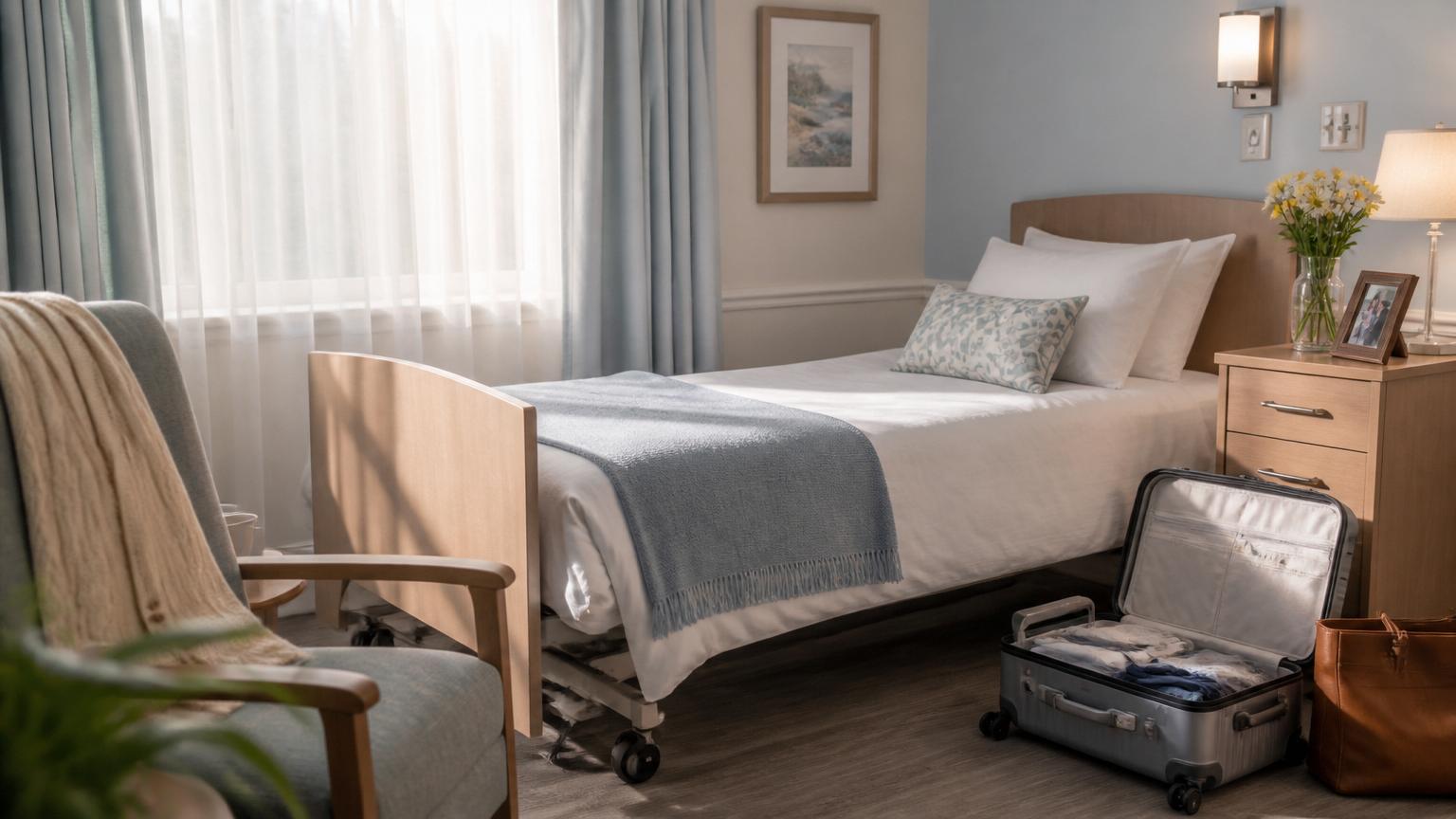
Family caregivers in the US take fewer vacations than any other unpaid workforce, and the data is not subtle. The AARP and National Alliance for Caregiving 2025 update found that 38 percent of caregivers had not taken more than two consecutive days off in the past 12 months, and 61 percent reported moderate to high burnout entering the summer. Respite care is the formal answer to that pattern, and it is the single most underused service in the long-term care system. A respite stay puts a loved one in a Medicare- and Medicaid-certified nursing home for a defined period, usually 5 to 30 days, while the primary caregiver rests, travels for a wedding, recovers from surgery or simply sleeps through the night for two weeks. This guide covers how a respite admission actually works in summer 2026, who pays, what the daily rate covers, and how to book a bed before the August window closes.
What a respite stay actually is
A respite stay is a planned short-term admission to a skilled nursing facility for a person who normally lives at home, almost always with a family caregiver. The resident gets a private or semi-private room, three meals a day, medication administration, help with bathing and dressing, and round-the-clock nursing oversight. The stay has a defined start and end date written into the admission agreement. Most facilities cap respite at 30 consecutive days because anything longer triggers a different category of admission under state licensing rules. The shortest stays are 5 days, which lines up with the federal Medicare hospice respite cap and tends to match a long weekend or a one-week trip. The point of the stay is not rehabilitation and not long-term placement. It is a defined break for the caregiver and a safe, supervised environment for the resident during that window.
Why summer is the demand peak
Three patterns push respite demand into July and August every year. First, school holidays move adult children and grandchildren into travel windows that often include long-planned family weddings, reunions and overseas trips. Second, caregivers who have postponed elective surgery through the school year schedule procedures in the summer, and a hip replacement or cataract surgery is the most common medical trigger for a 14 to 21 day respite booking. Third, the heat itself raises the operational risk of keeping a frail older adult at home in regions without reliable air conditioning, and families increasingly use a two-week respite in a climate-controlled facility as a heat-season hedge. The combined effect is that coastal Florida, the Carolinas, Arizona and the Gulf Coast often see respite bed availability drop below 5 percent by the first week of July. Booking in late June for a July or August stay is already late in those markets. Booking in April for August is on time. The pattern is well documented in the AARP Public Policy Institute caregiving research, which has tracked summer respite as the single most common unmet caregiver service request for four straight years. Families who plan respite around a single fixed date, such as a wedding weekend or a surgical admission, often discover that the closest facility with an open bed is 45 minutes farther than the one they toured first. Building a list of three acceptable facilities, rather than one, is the practical hedge against that.
Who pays for a respite stay
Funding is the part families get wrong most often. The short version: Original Medicare does not pay for a general respite stay. The only respite benefit inside Medicare sits under the hospice benefit, and it pays for up to 5 consecutive days of inpatient respite at a Medicare-approved facility per hospice episode, with a small daily copay. The resident has to already be enrolled in hospice for that to apply. Outside of hospice, the four common funding paths are: (1) private pay, which is by far the most common route; (2) long-term care insurance, which usually covers respite at the same daily rate as regular nursing home care once the policy's elimination period is satisfied; (3) state Medicaid Home and Community-Based Services waivers, several of which include a respite line item tied to caregiver hours; and (4) the federal National Family Caregiver Support Program administered by the Administration for Community Living, which funds time-limited respite grants through local Area Agencies on Aging. Veterans should also check VA Aid and Attendance and the VA's standalone respite benefit, which covers up to 30 days of respite a year and is independent of the standard pension increase.
What a respite stay actually costs
Daily private-pay rates for respite admissions run higher than the long-term private-pay rate at the same facility, because the building has to turn over the bed and absorb the admission and discharge paperwork inside a short window. Typical 2026 ranges look like this. A semi-private room in the Midwest or rural South: $250 to $325 a day. A private room in a metro market like Atlanta, Dallas or Phoenix: $350 to $450 a day. A private room in a high-cost state like California, New York, Massachusetts or Hawaii: $500 to $750 a day. Memory care respite usually adds $50 to $100 a day on top of those numbers. The rate generally bundles room, meals, basic nursing and medication administration. Items billed separately tend to be pharmacy charges if the facility cannot use the resident's home prescriptions, incontinence supplies above a daily threshold, salon services and any therapy ordered during the stay. Genworth's Cost of Care Survey is the most current public benchmark for state-level long-term care pricing and is a useful sanity check before a facility quotes a respite rate.
How to book a bed before the August rush
The booking workflow is the same at almost every certified facility, and running it cleanly takes one week. Start by shortlisting three homes within a 20-minute drive of the caregiver's house, using the staffing and inspection filters described in our guide on 12 red flags families can spot in the first 10 minutes of a tour. Call each admissions office directly and ask three questions: do you accept respite admissions, what is the daily private-pay rate for a private or semi-private room, and what is the next available respite window. Hold the most promising bed with a deposit, which is usually one to three days at the published daily rate and is credited against the final bill. While the bed is on hold, complete the facility's pre-admission packet, which will include a health history, a current medication list, a recent physician's order or History and Physical dated within 30 days, a copy of the advance directive and the health-care proxy, and proof of a negative tuberculosis screening from the past 12 months. Most homes also require a same-day or 24-hour COVID-19 test. The single most common reason a confirmed respite booking falls apart at the door is a missing H and P signed by the primary care physician, so ask the physician's office for that document at the same time you place the first call to the facility.

How to pack and prepare the resident
Pack one carry-on suitcase and one labeled bag for adaptive equipment. Inside the suitcase, include seven days of clothing regardless of stay length because facility laundry turnaround is usually 48 to 72 hours, with closed-toe non-slip shoes, a warm cardigan for the typically cold facility air, and one outfit suitable for a doctor visit if one is scheduled during the stay. In a clear gallon bag, pack the resident's current medications in their original pharmacy bottles, a printed medication schedule with drug names, doses and times, the insurance card, a government photo ID, the advance directive, and the contact card for the primary care physician and the caregiver. Adaptive equipment goes in a second labeled bag: eyeglasses with a backup pair, hearing aids with extra batteries, dentures with cleaning supplies, and a CPAP machine with the prescription card if used. Add one or two recognizable comfort items from the resident's bedroom, a current family photo with names written on the back, and a small wall calendar with the planned discharge date circled, because residents with mild cognitive impairment orient faster when the end date is visible from the bed. The Family Caregiver Alliance maintains a free self-care and respite planning guide that is worth printing for the kitchen table conversation the week before drop-off. Prepare the resident in the same week. Walk through the dates twice, name the facility out loud, and show a printed map of the building if the home will share one. Skip the surprise drop-off. Residents who are told two days ahead and helped to pack one familiar item themselves tend to settle into the first night in roughly half the time of residents who arrive without warning. Brief the home social worker on routines that matter to the resident: bedtime, preferred meals, hearing aid timing and the names of close family members. A one-page typed resident profile attached to the admission packet is one of the most useful documents a family can produce, and most facilities will keep it at the nurses station for the duration of the stay.
What to expect during and after the stay
Day one of a respite stay follows the same admission process as a long-term placement. The admitting nurse will reconcile medications, run a baseline skin assessment, document weight and vitals, and complete an MDS short-form assessment within the first 24 hours. The resident will be assigned to a specific neighborhood or hall and will eat in the main dining room unless ordered otherwise. Most facilities allow visits at any time during posted hours, and a brief in-person check-in on day two or three reassures both the resident and the staff that the family is engaged. Expect at least one mid-stay phone call from the charge nurse to flag any change in condition. Discharge day requires the same medication reconciliation in reverse, a written summary of the stay signed by the attending physician or nurse practitioner, and a follow-up plan if anything new was identified during the stay. Watch closely for the two most common post-respite issues: a urinary tract infection that started in the last 48 hours and presents at home as new confusion, and a medication change made during the stay that was not communicated back to the home pharmacy. Ask the discharging nurse to print a current medication list and to verbally confirm any starts, stops or dose changes against the original list the family brought in. Take a photo of the discharge summary before leaving the building. Schedule a primary care follow-up within seven days, even if the stay was uneventful, because that visit is the cleanest place to catch a missed change and to update the home medication routine. The ARCH National Respite Network state-by-state respite locator is also a useful tool for families who want to identify a second facility for a future stay before the current one ends. Our piece on how to fight an involuntary discharge notice covers the rare scenario where a facility tries to extend or convert a respite stay into a long-term placement without consent.
When a respite stay should become permanent
Roughly one in four respite stays ends with a family decision to convert the stay to a long-term admission. The trigger is usually not the resident asking to stay. It is the caregiver returning rested and recognizing for the first time how compressed the at-home routine had become. The honest signals to track during the respite week are: the resident's weight stabilises or improves on facility meals, sleep quality measured by night nursing notes is better than at home, and the resident participates in at least one group activity per day by the end of the first week. If two of those three are true, the home environment may already be past the point our guide on when it is time for a nursing home describes as the threshold. The conversion paperwork is straightforward when the bed is still open and the facility already holds the admission file. Our guides on paying for a nursing home without Medicaid and VA Aid and Attendance for 2026 cover the funding pivot, and the 2026 admission playbook walks through the conversation with the resident and the rest of the family. A respite stay that turns into a planned placement is not a failed respite. It is the system working the way it was designed to.
Frequently asked questions
Authoritative sources
Figures, rules and claims in this post are drawn from these official and independent sources.
- Medicare hospice respite care benefit
Centers for Medicare & Medicaid Services
- National Family Caregiver Support Program
Administration for Community Living
- Self-care and respite planning for family caregivers
Family Caregiver Alliance
- Family caregiving research and policy
AARP Public Policy Institute
- VA respite care benefit overview
US Department of Veterans Affairs
- Cost of Care Survey: nursing home and long-term care pricing
Genworth
- ARCH National Respite Network and Resource Center
ARCH National Respite Network
Related guides on this site
More from the blog


About this post
Written and reviewed by the Nursing Home Match editorial team. We update posts as the underlying rules and data change. This post is general information, not personal medical, financial or legal advice, always confirm details on Medicare.gov Care Compare or My Aged Care before making decisions.